
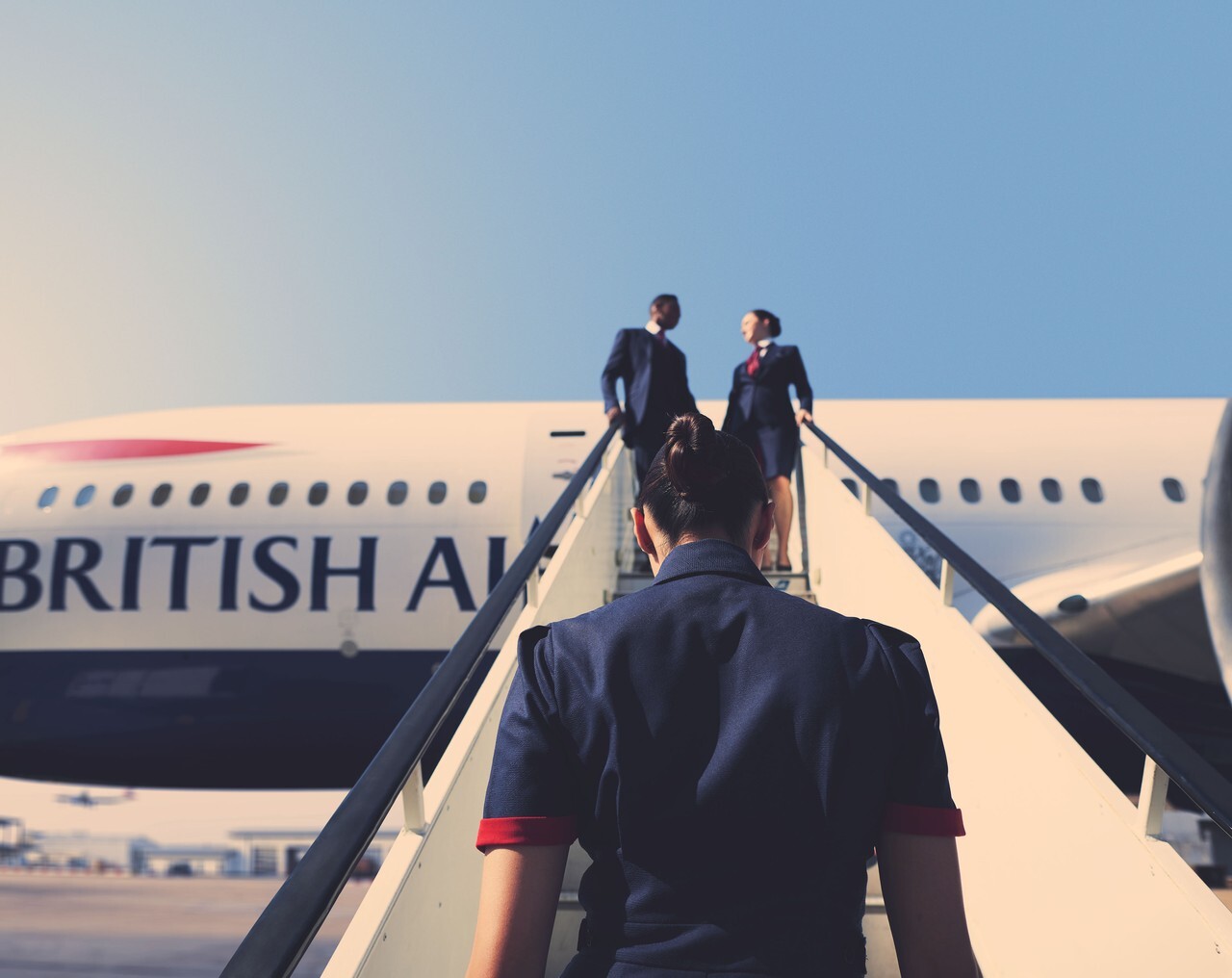
British Airways has a new message for passengers: stop filming the crew without permission.
British Airways Bans Passengers From Filming Cabin Crew Without Consent
British Airways has updated its Conditions of Carriage to prohibit passengers from photographing, filming, or livestreaming cabin crew and other staff without their express consent. The revised policy applies across the carrier’s network and warns that there will be consequences for passengers who refuse to comply.
“If, while you are on board the aircraft, we reasonably believe that you have filmed, live streamed or photographed our crew or other colleagues without their consent, we may take any measures we think reasonable to prevent you continuing your behaviour.”
According to the updated language, if British Airways reasonably believes a customer has filmed or photographed crew members without permission, it may take measures it considers appropriate (“we think reasonable”) to stop the behavior. Consequences can reportedly include removal from the aircraft at the next landing point, cancellation of onward travel, and referral to local authorities.
The policy is broad, covering not just phones or more traditional cameras, but anything that records, like wearable smart glasses and GoPro-style cameras.
Why British Airways Is Doing This
We are living in an era in which every dispute becomes content. A delayed drink service, a denied seat swap, a crew instruction, a boarding argument…someone pulls out a phone and starts recording.
Sometimes that encouragers accountability by helping to expose genuinely bad behavior.
Sometimes it creates a one-sided social media pile-on with no context at all. At the worst of times, so-called content creators stir up trouble that does not even exist, purely for content.
For flight attendants working in a confined cabin, often dealing with stressed and sometimes unreasonable passengers, it is not hard to understand why British Airways wants clearer boundaries (and also pursuant to hte UK’s Data Protection Act [DPA]).
But There Is A Tension Here
I also understand the other side.
There are times passengers should document what is happening, especially during serious misconduct, discrimination, threats, or safety issues. Video can protect passengers just as it can embarrass crew.
That is where these blanket-style rules become tricky.
An airline cabin is not quite a public sidewalk in which there is zero expectation of privacy, but if the rule is enforced selectively, or used to suppress legitimate documentation of bad conduct, it becomes problematic quickly.
On balance, I think British Airways is responding to a real problem.
Too many passengers now treat crew members like props for TikTok, Instagram, or viral outrage clips. Filming a flight attendant because your pre-departure beverage took too long or because you did not get the seat you wanted is ridiculous.
Crew members deserve to be protected from harassment in a climate in which content creators are rewarded for content that distorts or harms others.
But there should also be common-sense exceptions when passengers need to document serious incidents…and I guess in those case, passengers must be willing to stand their ground and insist that, yes, the police may have to sort out the issue on the ground.
I think United Airlines has the better policy:
The use of small cameras or mobile devices for photography and video is permitted on board, provided that the purpose is capturing personal events. Any photographing or recording of other customers or airline personnel that creates a safety or security risk or that interferes with crewmembers’ duties is prohibited.
A bit looser in an era in which everyone has a camera…
> Read More: United Airlines Loosens Onboard Photo Policy
CONCLUSION
British Airways has formally banned passengers from filming cabin crew without consent, reflecting the broader reality that phones and social media have changed onboard behavior.
The airline is right to push back against passengers who weaponize cameras for petty disputes. At the same time, airlines should be careful not to turn one-sided privacy rules into shields against accountability.
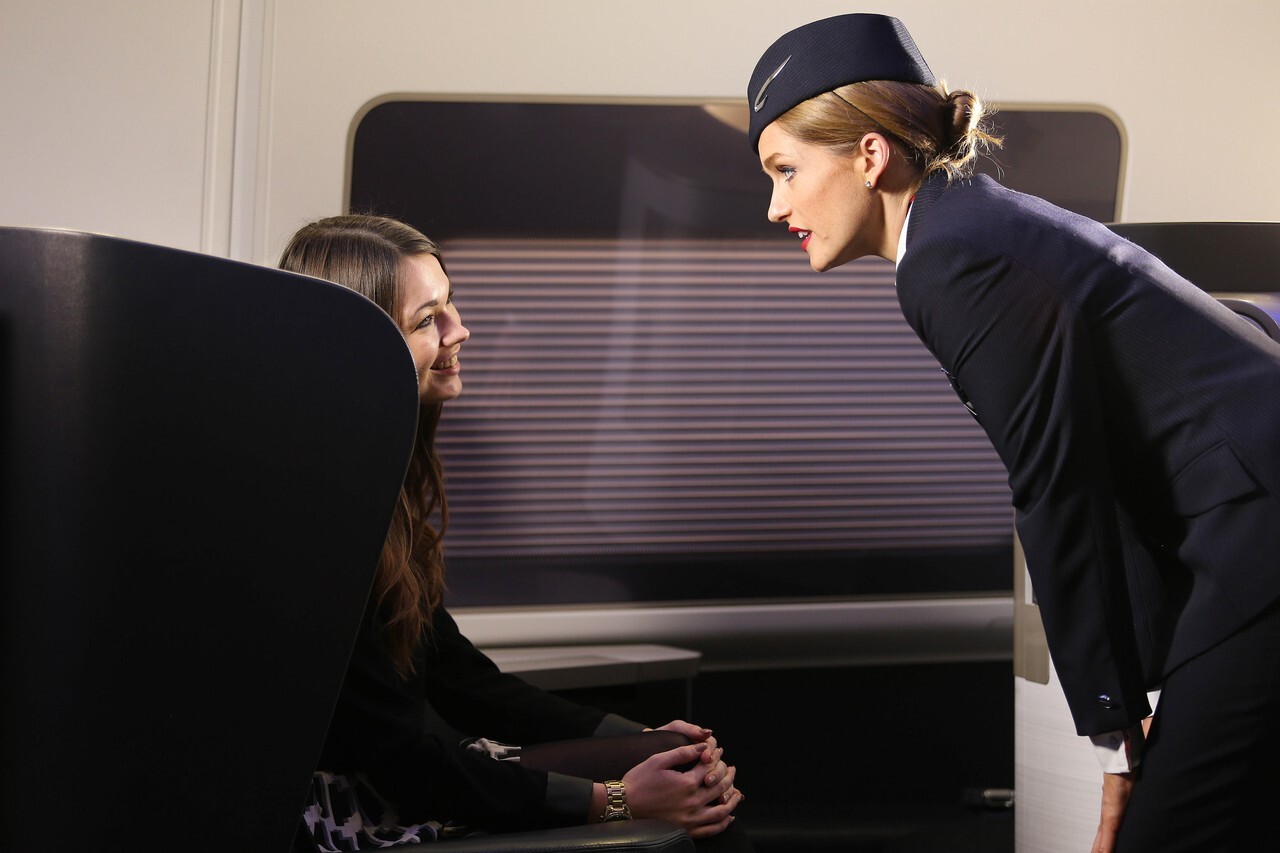
image: British Airways // hat tip: PYOK




Policies are one thing; enforcement is another. Sensible rules requiring consent are reasonable; however, if this is merely to punish passengers who record incidents (like Dr. Dao), then that’s really just a way to control bad PR, not about safety or respect.
The request is specific to video and photos, which is reasonable. It does not address audio recording that could be helpful in resolving passenger issues. Or did I miss something?
As some of you know, KLM has been implementing this measure for some time now and explicitly announces it during the safety demonstration/presentation before takeoff.
To the attention of BA passengers!