
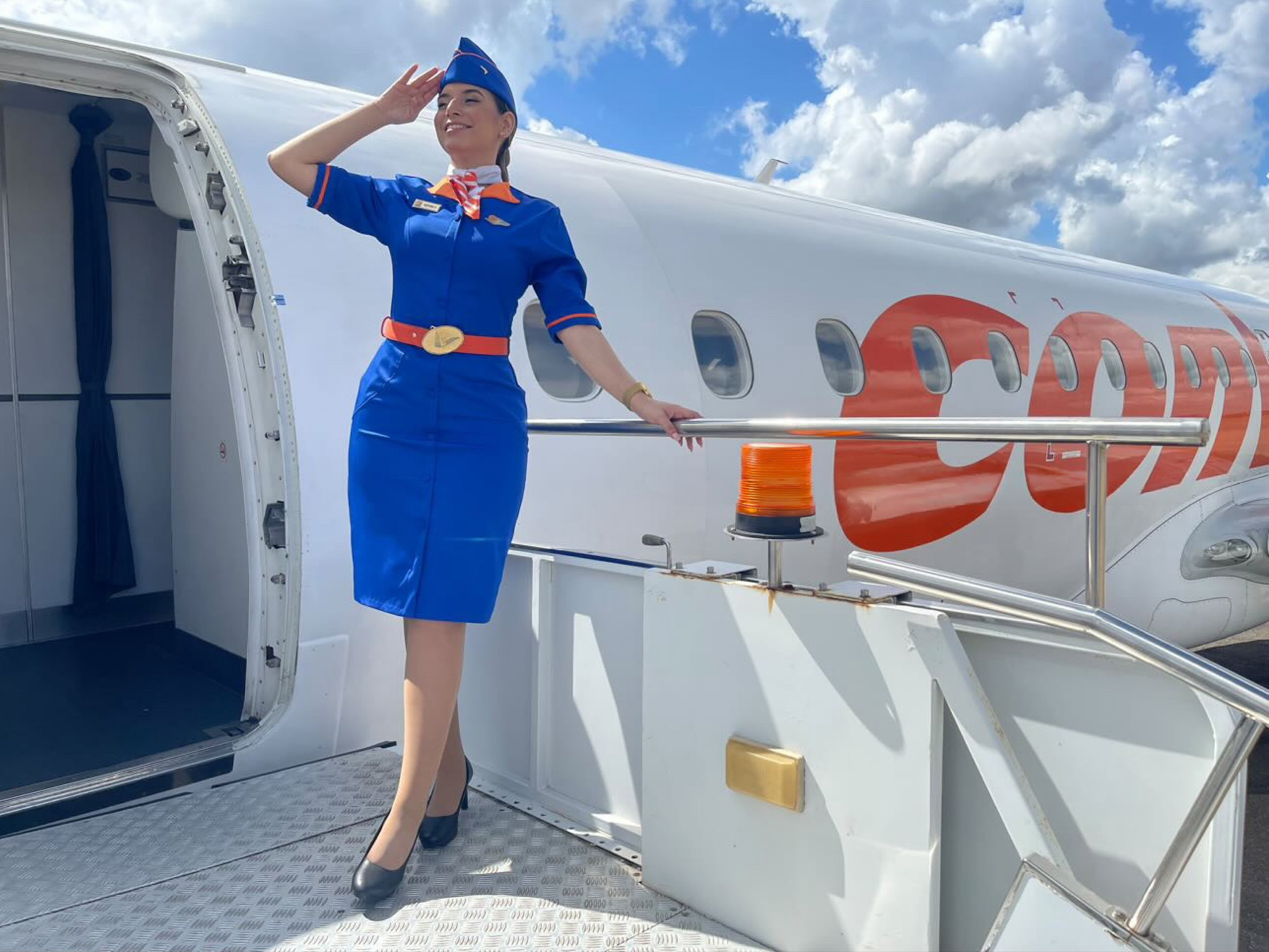
The U.S. Treasury Department has issued a new general license involving Conviasa, Venezuela’s state-owned airline, creating a path for U.S. persons to provide aircraft maintenance and airworthiness-related support to the sanctioned carrier. Does that mean Conviasa is suddenly returning to the United States? Not quite. But it is still a notable development in the slow reopening of U.S.–Venezuela air links.
U.S. Eases Conviasa Sanctions, Opening Door To Aircraft Support For Venezuela’s State Airline
The U.S. Department of the Treasury’s Office of Foreign Assets Control (OFAC) has issued Venezuela-related General License 59, authorizing certain transactions involving Conviasa, Venezuela’s state-owned airline (.pdf).
Conviasa has been under U.S. sanctions for years. In 2020, Treasury identified Conviasa and much of its fleet as blocked property, accusing the Maduro regime of using the state-owned airline to shuttle regime officials around the world and support its political agenda (which is most certainly did with a route map that included Caracas to Moscow, Havana, and Tehran). That effectively made dealings with the airline radioactive for U.S. persons.
Now, OFAC has issued a general license authorizing transactions ordinarily incident and necessary to providing goods, technology, software, and services for the “maintenance, repair, upgrade, refurbishment, improvement, safety, or airworthiness” of Conviasa aircraft. In plain English: U.S. persons may now support certain safety and airworthiness-related work involving Conviasa aircraft without needing a specific license from OFAC, so long as they remain within the limits of the license.
That can include things like aircraft parts, components, equipment, software updates, technical support, inspection, testing, logistics, customs clearance, and payment processing related to those authorized activities.
But this is not a blank check. The license does not unblock property. It does not authorize transactions involving certain excluded jurisdictions and entities, including Russia, Iran, North Korea, Cuba, or certain China-linked entities. It also does not magically grant Conviasa DOT authority, slots, gates, insurance, or a normal commercial relationship with the U.S. market.
So no, this does not mean you will suddenly see Conviasa selling Caracas–Miami flights tomorrow.
But this may be the first step…
A Stepping Stone To U.S. Service
Aircraft need parts, software, technical support, inspections, and maintenance. If a sanctioned airline cannot access those things, its ability to operate safely and reliably is constrained. As we’ve seen in Russia, carriers have been forced to cannibalize their own fleet for spare parts and without verifiable maintenance logs, restoring service to developed nations will be an uphill battle with those aircraft.
By authorizing U.S.-linked support for Conviasa aircraft safety and airworthiness, OFAC is making it easier for the airline to maintain aircraft in a way that could support broader normalization of air links between Venezuela and the United States.
This comes as U.S.–Venezuela air service has already begun reopening. American Airlines has resumed Miami–Caracas service, United Airlines is expected to return to Caracas from Houston, and Laser Airlines has resumed Caracas–Miami service using a leased Airbus A320 from GlobalX.
Conviasa, however, is different. This is not merely a Venezuelan private airline. It is the state airline, and it has long been wrapped up in U.S. sanctions policy. But it appears the United States is carefully reopening aviation links with Venezuela, while still trying to maintain limits on entities and counterparties it does not want to empower.
I Want To Fly Conviasa!
As an aside, I really do want to visit Venezuela.
Ideally, I’d like to go with Ben from One Mile At A Time, because this is exactly the sort of aviation adventure that would be more fun with another avgeek. My dream routing would be Conviasa in one direction, preferably on an Airbus A340, and Laser Airlines in the other direction.
Conviasa’s A340 operation is fascinating. It is not often these days that you get a chance to fly a state-owned carrier from Venezuela on a quadjet. That alone makes it interesting before you get to the legal and geopolitical layers.
Laser would be interesting for a different reason. Its Miami–Caracas service is being operated with a GlobalX aircraft, which reflects the practical workarounds airlines sometimes use when regulatory or sanctions complications make normal operations impossible.
Would I go tomorrow? Sure.
The U.S. State Department still urges caution on Venezuela, and there are serious safety, security, and legal considerations for U.S. travelers, but I’m ready to go.
And I want to strike while I still can…my long-awaited IL-96 trip on Cubana is very uncertain at this point, with Cuba experiencing a fuel crisis…that particular quad jet is certainly not flying right now.
CONCLUSION
OFAC’s new General License 59 does not fully restore Conviasa to the U.S. market. Unfortunately, the return of Conviasa to to Miami or Houston is not imminent. But it does authorize U.S. persons to provide certain aircraft maintenance, repair, software, parts, and airworthiness-related support involving Conviasa aircraft. That is big first step.
For travelers, the bigger story is that Venezuela is slowly being reconnected to the United States after years of isolation. American Airlines is back. United is preparing to return. Laser Airlines is flying again. And now Conviasa has at least one major sanctions-related obstacle eased.
Whether Conviasa actually returns to the United States remains to be seen, but the legal door just opened a little wider.
And yes, if Conviasa ever does return to the U.S., I would be tempted to be on that first flight…
image: @kathygga / Instagram






Been to Venezuela many times and it is a beautiful, but very troubled, country. And, I’ve flown domestic airlines down there, including Aeropostal. Very memorable flight on a vintage DC-9 with them where we were treated to a divebomber landing in Valencia. Come to think of it, that’s a pretty common landing style among Venezuelan pilots an it must have to do with their air force traning. It was rattly, but safe. Which I cannot say about the rest of the country. It can be VERY dangeroujs down there. Kidnappings, robberies, violance of all kinds – while not as rampant a few years ago – remain common. And Maiquetia Airport (CCS) is not a safe place. Nor is the 40 minute ride to Caracas itself. Just leaving the airport requires you to have pre-arranged your ride and the agency will send you a photo of the driver. Robberies are that common.
So, if you do go, be very careful. s
Wonder if those Conviasa flights are inspected/controlled now to preclude service to Tehran or Moscow ? Bet the bellies are full of contraband …
And good luck to the vendors getting $$$ from Venezuela. I believe that was the primary reason why at least some US carriers suspended service as they couldn’t repatriate their $$, similar to Nigeria….
And, Matt, enjoy your complimentary ‘handcuffs n’ manacles’ as I hear they’re a complimentary part of GlobalX’s {notorious} inflight service ( no courtesy upgrade there ! ) ..lol
Conviasa is just the venezuelan government airline. They actually own and fly a large fleet of brazilian made Embraer airplanes, which are well maintained. I have been in Venezuela several times recently, there are several privately owned airlines such as Avior, Rutaca, Laser, etc, flying modern Aurbus and Boeing airplanes. I recommend visiting Angel Falls, or Margarita Island. U.S. dollars are accepted anywhere now, including street vendors, they accept U.S. dollars.
Cannot wait to visit!