
Delta Air Lines sees an opening at LAX, but Los Angeles is not a market that airlines “win” so much as one they survive. The opportunity is real, and the gate constraints facing competitors may give Delta a rare window to grow.
Delta Sees A Rare Opening At LAX, But Los Angeles Has Humbled Airlines Before
Earlier this month, I wrote about Delta Air Lines’ growing ambitions at LAX, arguing that the carrier appears to see a real opening in Los Angeles but that Los Angeles has historically been a very difficult market.
American Airlines has pulled back. JetBlue is much smaller than it once hoped to be in Southern California. Southwest remains large, but it is not really competing for the same premium customer Delta wants and its strength is at airports beyond LAX (Burbank-Hollywood, Long Beach, Ontario, and Orange County). Alaska seems more focused on San Diego and the broader West Coast than trying to win LAX outright.
That leaves United as Delta’s most serious premium competitor in Los Angeles.
But United has a problem: gates.
Cranky Flier recently published a superb two-part series on the long and tortured history of airlines trying to win LAX and why this may be a good time for Delta to grow, but not necessarily “win,” Los Angeles. It is worth reading both pieces in full because they quantify exactly what I argued for in my earlier piece: LAX is a lucrative, fragmented, maddening market where airlines routinely mistake opportunity for dominance.
LAX Has Always Been Hard To Control
Los Angeles is not Atlanta, Dallas/Fort Worth, or Denver. There is no true fortress hub at LAX, and there probably never will be.
That is partly because the Los Angeles market itself is fragmented. LAX is the largest airport in the region, but Southern California traffic is spread across Burbank, Long Beach, Ontario, Orange County, and San Diego. Even within LAX, there is fierce competition from foreign carriers across the Atlantic and Pacific.
Historically, different carriers have taken turns trying to build something larger in Los Angeles.
United was long powerful at LAX, helped by its old Pacific gateway ambitions and its broad domestic presence. Delta became a much larger player after acquiring Western. American absorbed AirCal, later took over Reno Air and TWA assets, and then made a more serious run at LAX after the US Airways merger.
That American run is particularly instructive.
American had the brand, the gates, the local corporate presence, and the oneworld partners. It tried to turn LAX into a much larger international gateway, especially across the Pacific. For a while, it looked plausible.
Then the economics pushed back and it would be superficial to just blame the pandemic.
American eventually walked away from much of that international ambition. The pandemic accelerated the retreat, but the problems were already visible before then. LAX is an enormous local market, but longhaul flying from Los Angeles is brutally competitive. Foreign carriers are strong and costs are high. The glamour of Los Angeles does not make a route profitable.
That is the warning for Delta.
The opportunity is real. So are the limits.
Delta’s Advantage Is Not Just Demand, But Gates
The biggest reason Delta has a chance right now is not simply that it wants to grow, but that it has the space to do it.
Delta’s painful move from Terminals 5 and 6 to Terminals 2 and 3 now looks increasingly shrewd. At the time, it was a mess. The terminal shuffle was ugly, the construction process was long, and passengers had to endure the inconvenience for years.
But the result is a modern and connected Delta operation at LAX, with Terminals 2 and 3 tied together behind security and linked to the Tom Bradley International Terminal, where many of Delta’s partners operate. Delta also has its Delta One check-in and Delta One Lounge in Terminal 3, and the carrier is planning a second Delta One Lounge in Terminal 2.
That infrastructure will support a broader premium strategy.
Cranky notes that Delta now has 27 gates split between Terminals 2 and 3, with Bradley providing additional operational flexibility for international flying. That gives Delta space to grow within its existing footprint.
United, by contrast, is boxed in.
United is largely stuck in Terminals 7 and 8, soon to be consolidated under the Terminal 7 branding. Cranky notes that United has about 20 gates there, with only limited use of Terminal 6 for some widebody operations (a foolish move during the Smisek regime when United was in cost-cutting mode). United’s Star Alliance partners are largely in Bradley, physically separated from United’s own operation.
There was once a plan for Terminal 9, which could have given United and its partners a much better long-term platform at LAX. But that project has been shelved indefinitely. Without new gates, United can talk about being number one in Los Angeles, but there is only so much it can do.
American is also constrained, though in a different way.
Its Terminal 4 and 5 construction project should ultimately produce a better and more consolidated operation. LAX says Terminal 5 will become a 15-gate terminal, with completion anticipated in 2028. But for now, American is dealing with a scattered and disruptive construction environment. That is not the ideal moment to mount an aggressive competitive response…it’s such a pain to arrive at LAX on AA right now and walk what seems like miles to baggage claim.
Timing benefits Delta here. It has a functioning terminal complex, a growing premium product, and competitors whose physical limitations are not easily solved.
What Delta Should Actually Build At LAX
As I said before, Delta should be careful not to confuse growth with conquest.
No one is going to “own” Los Angeles. LAX is too competitive, too expensive, and too fragmented. But Delta does not need to own LAX to become the most powerful player there.
The better long-term vision is a premium-focused Los Angeles operation built around local relevance.
That means more domestic business markets where Delta can win corporate traffic. Chicago O’Hare, which just launched, is a good example. It also means selective transcontinental and premium leisure flying where Delta can support Delta One branding and feed its lounges.
Internationally, Delta should be more cautious.
Los Angeles to Asia makes strategic sense on paper, and Delta’s new service Hong Kong and planned service to Manila reflects a desire to rebuild relevance across the Pacific. I understand why Delta wants to try. LAX is a huge Asia gateway, and Seattle has become more complicated with Alaska and oneworld looming in the background.
But LAX has a long history of punishing ambitious longhaul plans. American learned that lesson. United has generally chosen to make San Francisco its dominant West Coast international gateway instead. Delta should not assume that a strong LAX terminal and premium lounge network will overcome the underlying economics of every route it wants to fly. Put frankly, I don’t think the new HKG service is going to work, but I hope Delta proves me wrong.
Europe is a similar story.
Delta can lean heavily on Virgin Atlantic, Air France, KLM, and other partners for much of the transatlantic network. That does not mean Delta metal has no role at LAX, but the smarter play may be selective Delta service combined with strong joint venture connectivity rather than trying to make LAX into another JFK.
The domestic side is where Delta may have the clearest upside. If it can become more useful to high-value Los Angeles travelers, the rest of the strategy becomes more credible.
A customer who flies Delta from LAX to New York, Boston, Chicago, Atlanta, and Washington is more likely to consider Delta for London, Seoul, Sydney, or Hong Kong, whether on Delta metal or a joint venture parnter. That is how utility builds loyalty.
CONCLUSION
Delta sees an opening at LAX, and I believe it is a real one. American is distracted and diminished in Los Angeles. United remains strong but physically constrained. Southwest is not the premium competitor Delta is targeting, and JetBlue is far smaller than it once hoped to be.
But LAX has humbled airlines before.
The history of Los Angeles is not one of clean victories. It is a market where airlines grow, overreach, retreat, and try again. Delta may be better positioned than it has been in years, especially with its Terminals 2 and 3 complex, its Delta One ground experience, and its partner access through Bradley.
The smartest version of Delta’s LAX strategy is not to “win” Los Angeles. It is to become more relevant to premium local travelers while its competitors are constrained.






Alot of words, nothing new
Thanks, Mr. Mayor.
Leave the guy alone. He may not have good opinions but he’s a helluva quarterback.
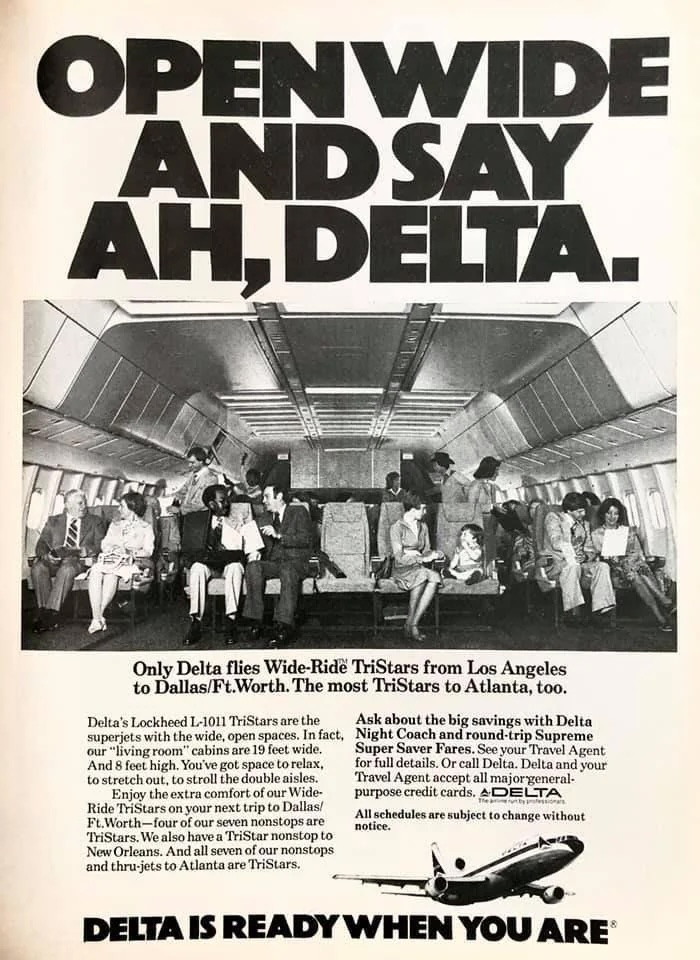
“Open wide and say, Delta” … Tim, don’t get any ideas…
A good perspective. Delta senior management would agree to most of your premises. But the past is the past, and the industry is now much more consolidated. CPE at LAX is going to approach $60 very soon. Low-fare carriers are not going to grow at LAX; in fact, they will likely shrink. Expansion opportunities will be mostly limited to network and international carriers. Delta has learned many lessons in NYC, BOS, and SEA over the past 15 or so years, and it is building LAX in that context. The loyalty piece of the equation here is important. Delta has taken a lot of corporate share away from AA in recent years, thanks to its own investment and AA’s mistakes. United’s dual-gateway approach will face not only infrastructure limits but also profitability challenges. The way I think about it is this: LAX-HKG will probably be tough for a while, but Delta’s entire network and loyalty base will be directed to that one flight. Meanwhile. United, which had a U.S. carrier monopoly to HKG, has four flights (SFO and LAX each have 2). If LAX-HKG P&Ls are really bad, United will be the first to blink, and it will be at LAX. Delta knows what it is getting into and is prepared for the long haul. I think, in general, that is what you will see. Delta is increasingly focusing on the LAX point-of-sale, while continuing to route its entire portfolio of premium customers through LAX. Neither UA nor AA is going anywhere, and no carrier will ever reach 40% pax share at LAX, but I think Delta will maintain and grow its lead, which will eventually support a more successful international gateway than U.S. carriers have established in the past.
“United’s dual-gateway approach will face not only infrastructure limits but also profitability challenges. ”
Is SEA/LAX a “dual-gateway approach” facing the same challenges?
SEA will always be limited for Delta and Alaska as an international gateway. Over the long run, Delta has far more growth potential at LAX, and that is where it will grow. I’m not predicting UA exits LAX long-haul; I’m just saying it will always focus its resources at SFO first. For Delta, LAX will be #1.
““United’s dual-gateway approach will face not only infrastructure limits but also profitability challenges.”
So, do both airlines face ‘infrastructure limits’ and ‘profitability challenges’?
notably,
the FAA’s elimination of certain landing procedures will cut the capacity of SFO at certain hours which does have some impact on UA’s SFO hub= but probably nothing they can’t manage.
Most major airports except in the south are operating at or near capacity so it really is about adding flights while they can be added.
LAX is in very good shape with 4 parallel runways but widebodies chew up a lot of airspace.
The FAA is close to approving a new visual arrival procedure for 28R though 1l & 1R will remain out of commission through October. Alaska picked a good time to cut their SFO capacity, and yes UA has done a good job managing the arrival capacity cuts.
20 Gates for UA will be plenty. DL can do what they want with 7 or 8 extra gates, UA treats LAX the way AA has failed to maintain JFK. Be competitive, but you don’t need to do everything since SFO can handle connecting asia and europe travel, and AA should have kept JFK competitive while leveraging PHL for connecting flows.
AA also has PHX nearby, which they seem to forget about quite a bit since they seem to care more about duking it out in Chicago and ATX than they do in more important areas.
Interesting and informative article. Thanks Matt!
For LAX-HKG United needs tags to Vietnam and Bangkok just to make their two daily flights work. I wonder how this will all work out for Delta. That will be a long flight with such incredible competition set in place already. United is constrained by gates but 20 gates is still not too shabby. I suppose each airline has to have some token flights to competitor hubs. AA does LAX to IAH. DL serves ORD, DFW, and IAH. Obviously Delta is a market leader at LAX, but as the article says there is no way that DL is going to muscle out the others without a real fight.
Now with that said, the band is tuning up for the subsequent back and forth. Ready, Set…
For LAX-HKG United needs tags to Vietnam and Bangkok just to make their two daily flights work. I wonder how this will all work out for Delta. That will be a long flight with such incredible competition set in place already. United is constrained by gates but 20 gates is still not too shabby. I suppose each airline has to have some token flights to competitor hubs. AA does LAX to IAH. DL serves ORD, DFW, and IAH. But UA left LAX-DFW. Obviously Delta is a market leader at LAX, but as the article says there is no way that DL is going to muscle out the others without a real fight. I would not be so sure that UA will blink first on LAX-HKG.
Now with that said, the band is tuning up for the subsequent back and forth. Ready, Set…
to add onto jetlanta’s good post, DL has always done a very measured amount of “growth” flying that takes time and money to support; every airline does it.
DL built BOS over the past 3 years and its growth is being slowed there because of gates which will partly be alleviated when the A-B connector is finished. Before BOS, DL grew SEA and before that it was NYC.
LAX is DL’s latest growth focus.
Problem for AA in LAX was that it hasn’t had as much profit to support growth; they have to rely on what works and that is their most profitable fortress hubs and not compete in heavily competitive coastal markets.
and AA’s LAX growth failed because it was heavily skewed to China- LAX-PVG, PEK and HKG. The mainland Chinese carriers dumped capacity at a mighty rate and made AA’s LAX-China flights unworkable while CX has no incentive as a non-JV partner with AA to give AA a decent place in the market; AA doesn’t even serve HKG from DFW any more while DL and UA both serve HKG.
UA cannibalizes SFO with every LAX flight but UA also does a lot more strategic/developmental flying which explains why they get much less profit per ASM than DL over the Pacific.
It is domestic gates that will make the difference in allowing DL to fly to other airline hub markets; there is a fairly long list of hub markets from LAX that have very little if any competition – unlike other major markets.
LAX will support any international growth. DL has the benefit of being next to TBIT and having a facility that is connected to that facility to overflow international operations there.
3 years could be all that is necessary to grow large enough at LAX in new domestic markets and also with more international markets to really begin to move the S curve.
It will be interesting to watch and Amex is clearly wanting to see DL succeed. They benefit in NYC and BOS because of DL and are happy to do all they can to help DL in S. California.
As a Midwesterner, LAX stopped getting my connecting business when I could fly to Australia/NZ through DFW and IAH in addition to SFO. I’ve flown DL LAX-SYD. (on a 777). But, I had to connect to LAX through a DL hub, and that is still the case. So, unless and until DL offers me an LAX n/s that provides a reasonable connection to and from Oceana, their stuck as my go-to for Europe only.
How’s that new terminal coming along at the ole ‘homeport’? CMH!
the real significance of DL’s addition of LAX-ORD and LAX-HKG is that DL is clearly signaling that it will take on UA to achieve what DL strategically needs.
DL and UA both have gained revenue over thepast 10 years at AA and WN’s cost. There are still a number of cases where DL flies from some of DL’s hubs to AA hubs but not to UA hubs in the same region – ex. DFW vs. IAH.
DL has been very focused on achieving what it strategically needs and going after it one competitor and one hub at a time.
The chances are very high that DL will start some of the other airline hub markets and some of those will be UA hub markets that DL does not serve.
add in the range and efficiency that the A350 and esp. the A350-1000 has from LAX and DL has plenty of advantages that no US carrier can match.
At LAX, no airline should take anything for granted!
Greetings to the merry memories of DL’s Lockheed L-1011 TriStars!
Despite its growth, LAX remains highly contested. Industry analysts note that DL faces intense, established competition in the transpacific market from UA and international heavyweights like CX. Gate constraints and airspace congestion remain challenges that the airline must navigate to maintain premium on-time performance.
To be honest, DL is already achieving massive success at LAX, where it holds the position of the largest carrier. Capitalizing on its massive state-of-the-art Terminal 3 headhouse and Sky Club facilities, the airline is actively expanding its footprint to capture more high-yield transpacific, transatlantic, and premium leisure traffic.
Interesting article but it ignores the other items often mentioned
1. AA has already publicly said, and recently, they’ll grow back to be the biggest at LAX post terminal construction
2. Still no mention of where Delta is getting incremental gates to sustain any advantage — saying “they’re connected to TBIT” doesn’t change how LAWA divvies up gates, common use or not
3. Alaska isn’t in a revenue sharing agreement with AA, but any conversation around AA’s relevance at LAX should mention that there’s an entire other domestic airline at LAX with a strength where AA is weak — the West Coast and all the secondary SoCal airports. And that other airline allows any AA loyal customer to use their network while having their AA loyalty rewarded and accruing miles. It is kind of a major oversight to ignore that, while AA decreased in size at LAX due to terminal construction, their local relevance to customers increased with their West Coast Alliance.
DL has great leverage at JFK, LGA, and BOS because they can route travellers through convenient DTW or ATL if they don’t have a nonstop. At LAX their only backup is fairly weak and geographically suboptimal SLC, and then a whole lot of nothing until MSP or ATL. They are going to struggle to offer LAX travellers good options to lots of places west of the MSP-ATL line (including Latin America). The routing advantage DL has on the East Coast (DTW+ATL) is the advantage UA has on the West Coast (SFO+DEN+IAH). Even AA can offer PHX and the almighty DFW, plus the Alaska alliance. UA will also get JFK flights from LAX next year. I expect UA to hold serve against anything DL throws at them at LAX.
If UA wanted to do something ‘quick and cheap’ to add capacity, could it build a walkway over the road from T8 to the other side, and then have tarmac-loading RJs parked there, maybe a little similar to how LGB works? The tarmac looks pretty empty there on Google Maps satellite view. That would seem like the easy equivalent of 4-6 gates. No need for a full Terminal 9. And LA weather is perfect for tarmac walking – it works fine for LGB.
are you Fing serious?
DL already serves the majority of LAX markets that are served from LAX but perhaps you can tell us the markets that ohter airlines serve but DL does not.
DL has gate access. matthew correctly recognizes that.
AA and UA are finished in LAX.
United nonstops from LAX not available on Delta:
Baltimore
Bangkok–Suvarnabhumi
Beijing–Capital
Cleveland
Columbus–Glenn
Guatemala City
Ho Chi Minh City
London–Heathrow
Newark
Pittsburgh
San Salvador
Tokyo–Narita
Washington–Dulles
United Express Regional Destinations
Bakersfield
Eureka
Fresno
Monterey
Prescott
Redding
Redmond/Bend
San Luis Obispo
Santa Barbara
St. George (UT)
Seasonal Destinations
Fort Myers
Glacier Park/Kalispell
Hayden/Steamboat Springs
Montrose
Palm Springs
Portland (ME)
Destinations served nonstop from LAX by AA not served by Delta:
Year-Round Destinations
Charlotte
Cleveland
Columbus–Glenn
London–Heathrow
Mexico City–Benito Juárez (Note: Delta only serves this seasonally)
Philadelphia
Pittsburgh
St. Louis
Washington–Dulles
American Eagle Regional Destinations
Des Moines
El Paso
Fayetteville/Bentonville
Oklahoma City
Omaha
Santa Fe
Tulsa
Seasonal Destinations
Missoula
thank you for providing a list of markets that DL might start from LAX – but the most likely markets are going to be other airline hubs esp. from the big 4.
your list should focus on the AA, UA and WN hubs where DL has little service. at some point, IAD, CLT, MIA, BWI and a return to LAX Midwest non-hub markets is going to be on the table.
all of this talk about what AA is going to do with regaining markets once it obtains gates is mere talk – considering that AA has a pretty poor track record of holding onto, let alone regaining market share it has lost in major competitive markets.
As for UA’s talk about expanding, it is all talk and will take years to complete, even if it is approved. Matthew is right that DL has a window in which it can grow and other airlines cannot.
As for everyone other than the big 3, none of them are growing at LAX in part because the airport is intensely competitive between the big 3 and the others can’t survive the competition and high costs.
AS and WN are beating each other over their heads at SAN which the big 3 are happy to let them do.
LTD say, “DL already serves the majority of LAX markets that are served from LAX but perhaps you can tell us the markets that other airlines serve but DL does not.”
Tory obliges with facts. Ouch, that is gonna leave a mark on poor little tim.
Then LTD says, “your list should focus on the AA, UA and WN hubs where DL has little service.”
What? Poor little fella.
Great job Tory! LTD hates facts and data. Strange for a person who claims to be an analyst. Can’t make this stuff up.
wow… late night reply from Tim and he’s gets absolutely owned with the response to his own question…
I wish it was surprising but it isn’t. Tim, try not to make absolute claims when you clearly don’t know the answers to your own questions.
Nice summary, Tory.
Thanks. And that’s just nonstops. It doesn’t cover destinations UA can serve from LAX through SFO, DEN, or IAH or AA can serve through PHX or DFW that Delta can only serve by overflying with a backtracking connection through MSP or ATL if they’re not served through SLC, which was my original point.
all the list of tertiary markets that AA and UA serve with RJs does nothing to say which carrier will be the largest which includes serving the most business markets.
those RJ markets don’t carry much if any local LAX traffic.
DL already carries the most corporate traffic in the US. Adding more business travel markets including to other airline hubs – all of which are major markets including for corporate travel – is what will move the needle at LAX.
Not all flgihts from LAX are created w/ similar revenue and market share potential.
The fact that you don’t understand what currently makes the difference and what will make the difference is what is frightening.
I think business travelers definitely look at where they’ll be able to spend their points and use their status on leisure trips, and UA has a nice spread of upscale vacation and 2nd-home destinations on RJ’s from LAX (especially skiing).
corporations that pay for travel look for the best network and largest supplier of airline services regardless of what recipients of loyalty programs want.
and DL does fly to lots of leisure destinations including more service to more of Florida- PLUS mountains and beaches.
Leadershp in LAX will come down to who puts together the greatest number of business destinations. The biggest difference between the big 4 is the gap between each of the big 4 and other airline hubs from LAX. that is certainly where DL will focus the most growth. as they tap into some of the biggest industry markets including AA and UA hubs. and there is very little that other airlines can do.
ATL-LAX is one of the top markets from LAX and UA doesn’t even fly it.
Hearing that UA is in talks with LAWA to expand T8 at the south end to allow widebody gates with a new, massive Polaris Lounge. They’re also going to take over the AA express facility when T5 is complete, and upgrade that to accommodate narrow body aircraft. There’s also a real possibility that they get access to more gates in T6 so I don’t think UA is as boxed in as some might think. It’s going to be a dogfight in LAX over the next decade
even if all of that happens, it will take years and it will also put UA in the same position that AA has been with the Eagle’s nest by having a remote facility that is only accessible by bus and offers an inferior experience.
UA is not going to go down without swinging but they are in the worst position WRT facilities at LAX. AA and DL have a natural advantage with being adjacent to TBIT and the west concourse that has plenty of gate space