
Statements from United Airlines CEO, Scott Kirby this week about a merger with American Airlines caused significant uproar but there is a case that supports the tie-up.
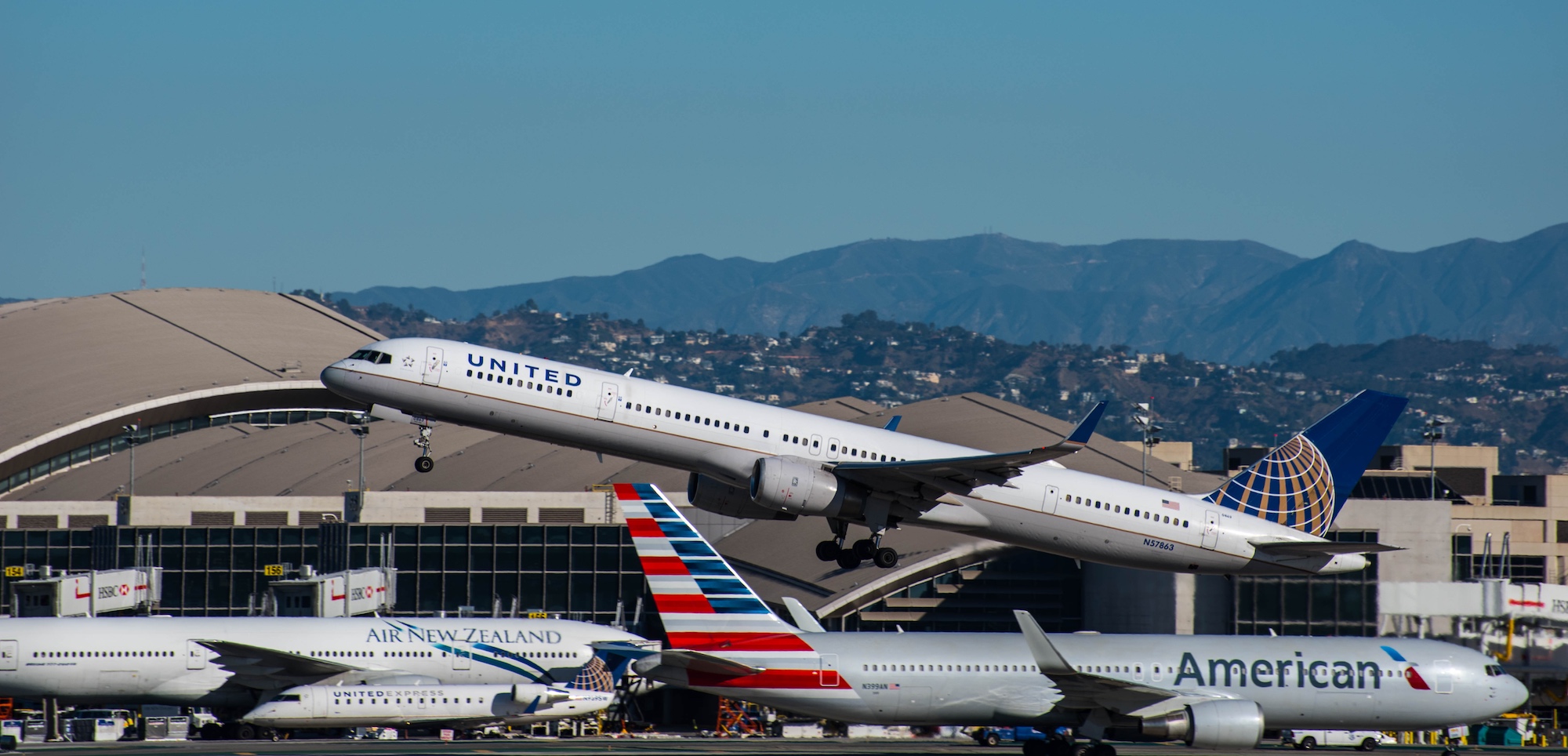
Kirby’s Outlandish Proposal
United isn’t just posturing anymore. The idea of a merger or outright acquisition of American Airlines is being floated, and though American rejected the notion, it should make travelers very uncomfortable. United Airlines sees an opportunity in a weakened rival, and similarly, an opportunity with an administration that loves landmark deals, announcements, and surprising the public. But consolidation at this scale has never ended well for consumers. Fewer choices, higher fares, and a loyalty ecosystem that tilts even further against the customer is the likely outcome. Regulators will have to decide if this is efficiency or simply market power dressed up as strategy. Whether it was conjecture, a strategic move to get a smaller deal done, or just to annoy the company that fired him, this is the kind of move that would reshape the industry overnight.
A Case That Supports The Merger
There is a case that supports such a merger, as absurdly large as it may be, but not in a vacuum. Give me a wide berth on this.
US carriers have fewer seats from the greater New York market (including Newark) to London than British carriers and twice the competitors domestically. New York to Paris is drowning in Air France seats more than all US carriers combined by a hefty margin. Los Angeles to Tokyo is owned by the foreign carriers – even often forgotten about ZIPAIR has more seats (though the breakdown is quite different) than American or Delta.
New York Area (JFK/EWR) to Paris (CDG/ORY) Daily Capacity
| Airline | Daily Flights | Daily Seats (Approx.) | Primary Aircraft | Route | Carrier Type |
|---|---|---|---|---|---|
| Air France | 8–11 | 2,200 – 3,000 | Boeing 777-300ER / Airbus A350-900 | JFK/EWR – CDG | Foreign Legacy |
| Delta Air Lines | 3 | 843 | Airbus A330-900neo | JFK – CDG | U.S. Legacy |
| United Airlines | 2 | 514 | Boeing 777-200 / 767-400ER | EWR – CDG | U.S. Legacy |
| French bee | 1 | 411 | Airbus A350-900 | EWR – ORY | Foreign Low-Cost |
| Norse Atlantic | 1 | 338 | Boeing 787-9 | JFK – CDG | Foreign Low-Cost |
| American Airlines | 1 | 304 | Boeing 777-300ER | JFK – CDG | U.S. Legacy |
| JetBlue | 1 | 138 | Airbus A321LR | JFK – CDG | U.S. Hybrid |
| La Compagnie | 1–2 | 76 – 152 | Airbus A321neo | EWR – ORY | Boutique (All-Biz) |
| TOTAL | ~20 | ~5,300+ |
US Carriers vs. Foreign Carriers: Daily Capacity (LAX to Tokyo)
| Carrier Group | Airline | Daily Flights | Daily Seats | Primary Market Focus |
|---|---|---|---|---|
| Foreign Carriers | ANA (All Nippon) | 3 | 730 | “The Room” Business / HND-NRT Split |
| JAL (Japan Airlines) | 3 | 715 | Premium Service / 2-4-2 Economy | |
| Singapore Airlines | 1 | 350 | Ultra-Luxury / 5th Freedom (NRT) | |
| ZIPAIR Tokyo | 1 | 290 | Low-Cost / Lie-flat Hybrid | |
| Foreign Total | 8 | 2,085 | 67% Market Share | |
| U.S. Carriers | United Airlines | 2 | 514 | Multi-Airport Connectivity (HND/NRT) |
| Delta Air Lines | 1 | 281 | Delta One Suites (HND) | |
| American Airlines | 1 | 244 | High-yield Business (HND) | |
| U.S. Total | 4 | 1,039 | 33% Market Share |
Practical Implementation
United and American together would control far too much to approve, but if Delta paired up with Alaska too, and maybe JetBlue there would be two large US super carriers that still compete against each other. That combination would have similar domestic market share as the United-American merger. Southwest, Breeze, Allegiant, Frontier, and Spirit (if it makes it) could still apply pricing pressure at home. The combined carriers would have the ability to save money with combined stations and staff, better allocate seats, lounge space, invest more in their product, expansion and utilize their fleet better.
That combination also prevents the more significant risk that American never pays its mountain of debt, the same would be true of JetBlue which is having trouble at the moment. Alaska and Delta had a frenemy relationship for years that has vaulted into an all-out battle in Seattle, but faced with an existential crisis (especially if United-American was Star Alliance) they may bury the hatchet.
While this may seem outlandish, consider that two carriers, JetBlue, and Spirit have an unsustainable financial outlook. Frontier is not significantly better. In 2008, United and Continental merged, closing the deal two years later. Delta and Northwest followed in 2012, American merged with US Airways in 2013. In a span of three years, six US flag carriers became three. There’s precedence for this type of consolidation. It might not be good for US consumers, but in the case of JetBlue and Spirit, job losses and competition matter too. American’s finances are precarious and it may be a real risk that the carrier in its current form can weather many more years of negligible profit or significant loss.
Bad Idea, Don’t Do It
The combined entities may, in fact, be better equipped to fight foreign carriers invading US markets but that assumes that the US responds by offering more direct flights to foreign nations. It also presumes that foreign carriers don’t seek greater alignment with each other as Air France/KLM have done. IAG already owns Iberia, and Aer Lingus for example.
Either outcome would likely be atrocious for domestic flight costs. Southwest and the discounters don’t have the capital and the equipment to compete with either one or two behemoths. They wouldn’t be able to match the fleets, seats, or renewed cost savings and richer bank deals for combined entities of this size.
It would also shift the alliance strength that has been a stabilizing force across the industry over the last few years. If United-American were to transition to Star Alliance, oneworld would be left with just Alaska, entirely insufficient for the market size. And if it were to go to oneworld (unlikely because United’s balance sheet would likely leave its management in place), Star Alliance would lose a homefield advantage in the largest air market in the world. Just Air Canada would be the sole carrier north of Salvador in the Star Alliance. Both United and American were founding members of their respective alliances.
Conclusion
Some have speculated that Kirby’s remarks were motivated to get back at the airline that fired him, but if that was the case, it backfired as American stock rose, not fell on the news. Others have said (as I initially thought) that it was a case of “Shoot for the moon so you can hit the ceiling” approach to clear the way for a JetBlue acquisition. That still might be the case. But with time, I think he might have seen this as a genuine, once-in-a-lifetime opportunity to build a truly historic carrier. The Trump administration loves big deals, surprising the public, and unconventional approaches. It’s also unabashedly America first, and the objections from foreign carriers would likely encourage the administration not counter its ambitions. But whether just United-American or a Delta combination too, this would be disastrous for US consumers and potentially for the global aviation community.
What do you think? Could United-American happen if there’s a counter balance merger?






I think the argument is flawed even with a wide birth. Take for example United to Tokyo back in the 90s and 2000s United operated a hub at NRT they operated flights to China, South Korea, Hong Kong, Singapore, Bangkok, out of NRT. Take for example Delta when they operated a hub out of FRA and all the countries they served from FRA. In the case of both United and Delta some of those countries are now served nonstop from the US from a singular cite or multiple cities. There is no need for United to run 8 flights a day to Tokyo even if they merged with American because the consumer is looking for access to more nonstop flights throughout Asia. Does Delta need to operate 8 flights a day JFK-CDG or are their customers better served with them taking those planes and sending them nonstop to places cities throughout Europe nonstop from the US.
People looking at singular markets like JFK-CDG, LAX-Tokyo in a vacuum it would appear US carriers are loosing but when you look at the whole picture both United and Delta have greatly expanded their nonstop reach from multiple US hubs to cities throughout Europe and United has greatly expanded its nonstop reach to cities throughout Asia.
@Proschwit – I don’t disagree entirely, in fact, I have a whole section entitled “Don’t Do This”. But I think what does make sense is that the US benefits from as much traffic as possible. There’s no question we could lose two of those carriers in the near future, and I have long derided American management and their tremendous debt load which is not countered by healthy near term profitability. There’s a reasonable possibility that DOJ’s selective choosing of winners and losers has not been as successful as they project. There is an outcome in which a fuel crisis makes it impossible for the current situation to continue without consolidation. That has to play in the back of their minds. It would also end any opposition from the the other three carriers.
And the outstation hubs are a good point too.
The only reason American’s stock went up is because a merger with United would help or solve their debt issues and would be an upgrade to their service.
Oof. No. Bad for workers, consumers, nearly everyone.
Also, not sure who needs to hear this, but Alaska Air finally added MFA for account login, so, unless you like getting hacked and losing all your pointies, please do set that up, friends!
The historical mediocre returns for US airlines are the case for more consolidation. Everyone talks about higher fares, but wake up, air travel has to turn a decent profit.
Let’s be ultra-realistic. Given that the B6/ NK merger proposal was rejected, what would lead anyone to seriously believe this could actually happen?
The said UA-AA merger is attracting so much attention only because it’s highly conducive to creating a sensation… On the other hand, the visionary Scott Kirby may propose something as unreasonable as a UA-AA merger and then pivot to a UA-B6 merger making it seem far more reasonable.
United does not want JetBlue. There’s no reason on God’s green earth that UA would want to buy JetBlue’s $10 billion in debt.
Put another way, I think UA desperately wants B6’s assets, but the cost right now is too high.
@Goforride – David Neelman said the same thing. If it were entirely opposed to debt, American would not be the answer – at all. American’s debt ended 2025 at $36.5 bn, for an $8bn market cap company.So then the question becomes, is it the “right debt” meaning that it’s worthwhile to take on that ridiculous number if it was for American (and its huge market presence), but for a $1.5bn company, it’s a hard pass.
If it was just about access to new aircraft (as Alaska’s Hawaiian purchase more or less was), Spirit could double United’s fleet for about half price from new aircraft with virtually no waiting time – but it’s not doing that either. To get to that figure I performed the strangest possible calculation (Spirit debt/divided by owned or finance-leased aircraft) to arrive at about $25-27MM per aircraft.
So that leaves very few choices: 1) United actually does want to buy American, 2) It’s a ploy for an indebted whole carrier it actually does want to buy, or 3) It was some sort of revenge power play that resulted in fraudulent market manipulation inflating its own share price and to Kirby’s dismay, also American’s.
United simply is trying a distraction from taking over JetBlue. That way they can claim that they “tried” to get AA to agree to a merger but it failed so, darn it they’ll just have to settle for controlling the NYC market by controlling B6.
If AA were smart (don’t laugh) they would have agreed to a merger with United with the stipulation that there would be a very substantial penalty if the merger didn’t conclude. Given the ridiculously low chance of such a merger being allowed they would have walked away with a fortune – paid by United. If by some insanely unlikely chance such a merger was permitted in the short term the next (sane) administration would break them up, leaving AA with a similar position except with a lot less debt. Either way, American wins.
@Christian – Do you think they would get it? It’s not a forgone conclusion that such an agreement would pass United shareholder support.
When Delta took over Northwest, NWA was a pretty respectable airline. While it took a bit to rid the combined employees to get over “Are you Delta south or Delta north?” attitude, both sides realized that they were better off than before. They are now, “Delta”. United is a pretty respectable airline, too. One notes United’s customer service is pretty darn good. American, on the other hand, is not so respectable. Of the “majors’, American ranks almost with likes of Frontier and (gawd forbid) Spirit in customer satisfaction. So why would United want to inherit the animosity (on all fronts!) of American Airlines’ staff?
All that opinion slinging without equitable dialogue or consideration of the customers. Just look.
The American aviation market must be completely opened to foreign investors, otherwise it’ll become Unitedeltamerican.
@Paolo – I am trying to think of other markets that are completely opened to foreign investors, and I am struggling.
Your history is incorrect. Delta and Northwest merged in 2008. They were the first mega merger. United and Continental followed after.
There were 6 major carriers back then. Now there are only 3. It’s very different than NW-DL, CO-UA, and US-AA. The world has changed a LOT in the last 20 years. Get it right.