
United Arab Emirates, and now Qatari, authorities have stepped in to ensure stranded travellers are not left without accommodation, but the program…at least in Dubai…is not as straightforward as free luxury hotel stays.
As War Rages, UAE And Qatar Support Stranded Travelers
It’s worth noting at the outset that this is not the type of “vacation” that anyone wanted…with UAE and Qatar in the line of fire due to its hosting of U.S. bases, even major civilian airports and tourist hotels are not off limits.
It appears that the government of Abu Dhabi is, at this point, offering a more generous policy than Dubai, with Qatar announcing its own policy earlier today.
What The UAE Says It Is Covering
The UAE’s General Civil Aviation Authority (GCAA) has said the state is “bearing all hosting and accommodation costs for affected and stranded passengers,” which includes hotels and meals for the more than 20,000 people affected by flight suspensions.
That language is broad, but it is also framed around disrupted passengers and operational adjustments at airports and airlines, which suggests an airport-and-airline-managed operation rather than directly from the government (temporary lodging, meals, and rebooking support).
Abu Dhabi Is Clear: The Government Covers The Extra Nights
Abu Dhabi’s program is the most explicit. The Department of Culture and Tourism – Abu Dhabi (DCT Abu Dhabi) issued a circular instructing hotels to extend stays for guests who have reached checkout but cannot leave, and it states: “The cost of the extended stay will be covered by DCT Abu Dhabi.”
I see no caveats about price: it appears that in Abu Dhabi, the government has clearly told hotels it will pay for the extension, with hotels submitting invoices to DCT rather than charging guests and making guests submit for reimbursement.
Dubai Is Different: No Evictions, Same Booking Conditions, Then Government Assistance Gets Involved If You Cannot Pay
Dubai’s Department of Economy and Tourism (DET) told hotels to let guests extend “under the same conditions as their initial booking” and emphasized that “no guests are evicted.”
But DET also told hotels to notify the department “in case a guest is unable to cover the costs associated with an extension of his or her stay,” and hotels must provide details about the booking and whether a third party is covering costs.
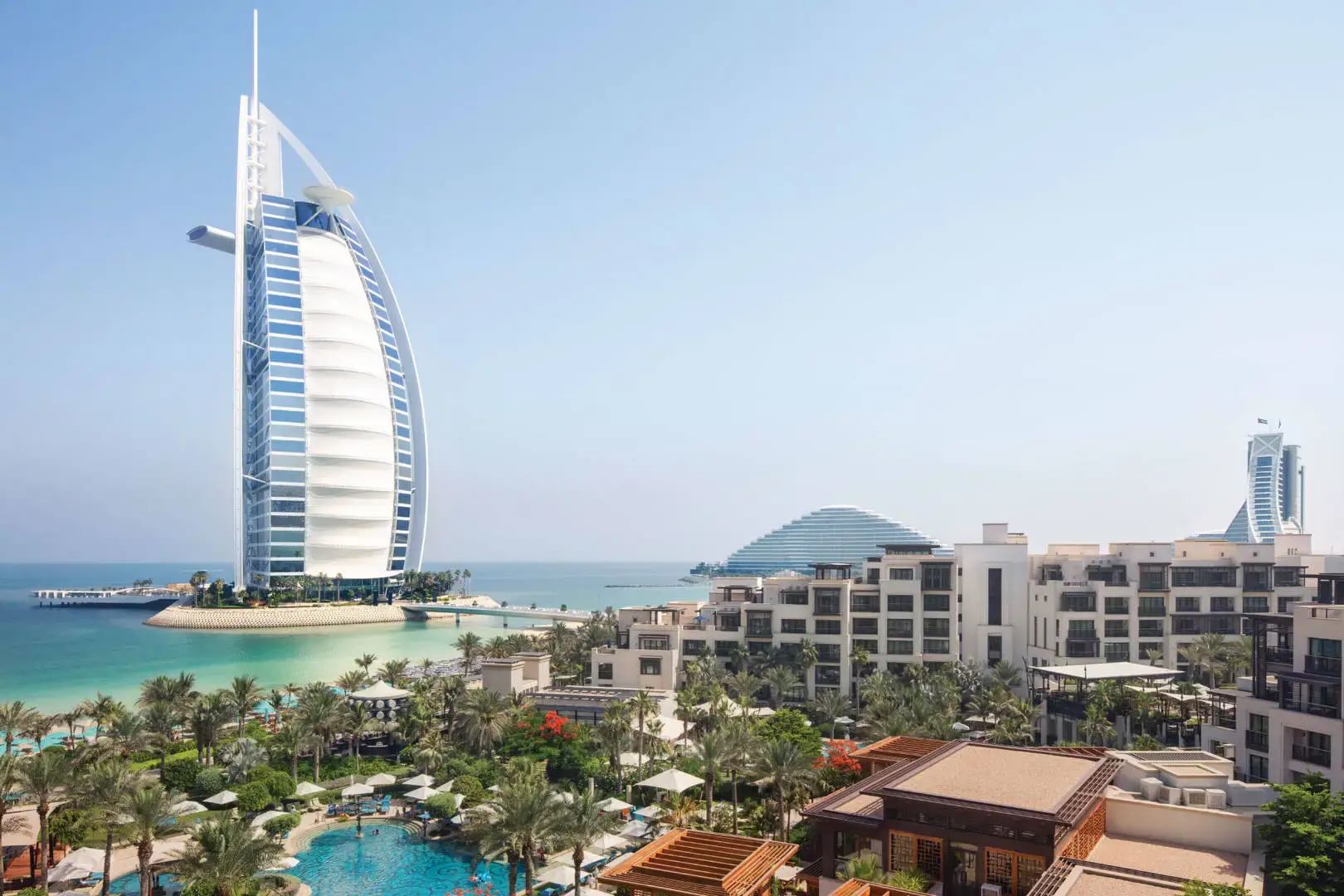
Thus, it appears the program is a bit more murky in Dubai. I’m thinking that guests who are “trapped” at the Burj Al Arab will not have their extended stay picked up by the government…
What Qatar Says It Is Covering
Earlier today, Qatar issued guidance to hotels via Qatar Tourism “requesting” that hotels extend stays for guests trapped due to airspace closures. The government ministry added that it will “cover the additional costs incurred, as the safety, security and wellbeing of all visitors remain among our highest priorities” but has not provided detailed guidance as to the limits of such costs.
Qatar airspace remains closed and after initially resuming operations yesterday in Abu Dhabi and Dubai, missile attacks in the area scuttled plans to resume service on a more widespread basis.
> Read More: Etihad, Emirates Restart Flights As Qatar Airways Remains Suspended
CONCLUSION
If you are stranded in Dubai right now, the key takeaway is that the system appears designed to prevent hotels from tossing people out, while routing financial hardship cases to the Department of Economy and Tourism for handling. Abu Dhabi is more straightforward, with DCT Abu Dhabi explicitly committing to cover extended stays and instructing hotels to invoice the government. In Qatar, new guidance suggests the government will also cover extended hotel stays in a similar fashion, but details of that policy have not yet been publicly revealed.
As Iran escalates its response to the U.S.-Israeli attack, guests trapped in the UAE and Qatar may need to prepare for an extended stay…
image: Jumeirah






Good on Qatar and Abu Dhabi. Very curious whether travel insurance policies would cover anything under Trip Interruption (if had to purchase new tickets or if missed out on prepaid accommodations and tours elsewhere), or under Trip Delay (if had to spend extra nights, transportation, meals, etc. stranded in Doha or Dubai, etc.) What I recall is that the insurance via the credit cards are incredibly weak, and they try to get out of any and every claim. However, many travel policies directly with insurers often does ultimately pay out, with documentation, appeals, etc. Hoping everyone will remain safe, patient, and can recover in the end.
Trip insurance specifically excludes war. Unless you get one of those ultra pricey cancel-for-any-reason policies.
Much of it depends on the specific insurer and the fine print of the particular policy.
If someone wants to cancel an upcoming trip ‘because of the war,’ unless and until there’s a specific cancellation by a common carrier, I doubt they’d get reimbursed.
However, if someone is directly affected already by this, say, stranded in Doha or Dubai, (or at a point of origin, like Asia or Africa, etc., and were connecting through ME) I’d expect they’d receive assistance for the hotel expenses, if any, and perhaps, also additional transportation costs, like alternative flights, if reasonable and within the terms of the policy.
If affected, policy holders should definitely consult with their insurance company.
In the UAE, it’s a crime to not pay bills due. Debtors do get imprisoned, and so this could get ugly for those stuck at Dubai hotels with no ability to pay absent borrowing money (under who knows what terms).
Dubai is not as rich as Abu Dhabi, as the latter has the bulk of what remains of ONG revenue while Dubai has relatively little new ONG of its own to sell. Also, Dubai has far more tourists than Abu Dhabi and so the burden on Dubai’s government is much heavier than it would be on Abu Dhabi’s government.
Maybe they will go all ‘hard-liner’ on those affected ‘guests’… but, more likely, they understand this is an unusual circumstance; not merely ‘debtors’ but practically refugees, through no fault of their own. Also, most of those standard visitors will leave as soon as flights operate.
Dubai’s ruler is very image conscious, and so locking up “white” debtor visitors who ran up local debt in Dubai due to this situation would soon get released from jail upon it becoming a noticed PR issue.
Speaking of PR, I see both Sheikh Mohamed and Sheikh Hamdan did a walk-through Dubai Mall today. Gotta show the people that everything’s going ‘just fine.’ Reminds me of W’s ‘now… watch this drive!’ moment.