
Visa’s credit card data from ILTM Cannes hints at who will be traveling in style, where they are going, and which destinations are quietly losing their shine.

A Payments Company Walks Into ILTM…
A senior economist from Visa, Dr. Simon Baptist, stepped onto the stage at ILTM Cannes with a novel approach to macro luxury travel trends.
Using anonymized card spending as a proxy for the global economy, Visa laid out where growth is coming from, who is actually spending, and which destinations are winning or losing with affluent travelers. For anyone in the luxury travel world, it felt less like an academic lecture and more like a cheat sheet for the next five years.
This was not about loyalty points or airport lounges. It was about macro forces, AI, demographics and the surprising places where high spenders are quietly swiping their metal cards.
The Macro Backdrop: Slow World, Faster India, Resilient US
Dr. Baptist started with the the good news and the bad news on the same slide. Their GDP forecasts show a world that is slowing, yet not collapsing.
Among developed markets, the US is the relative overachiever, with growth in 2026 projected to beat the Eurozone, Japan and the UK. Europe limps along close to 1% growth, Japan barely moves, and the UK is not slated for significant growth either.
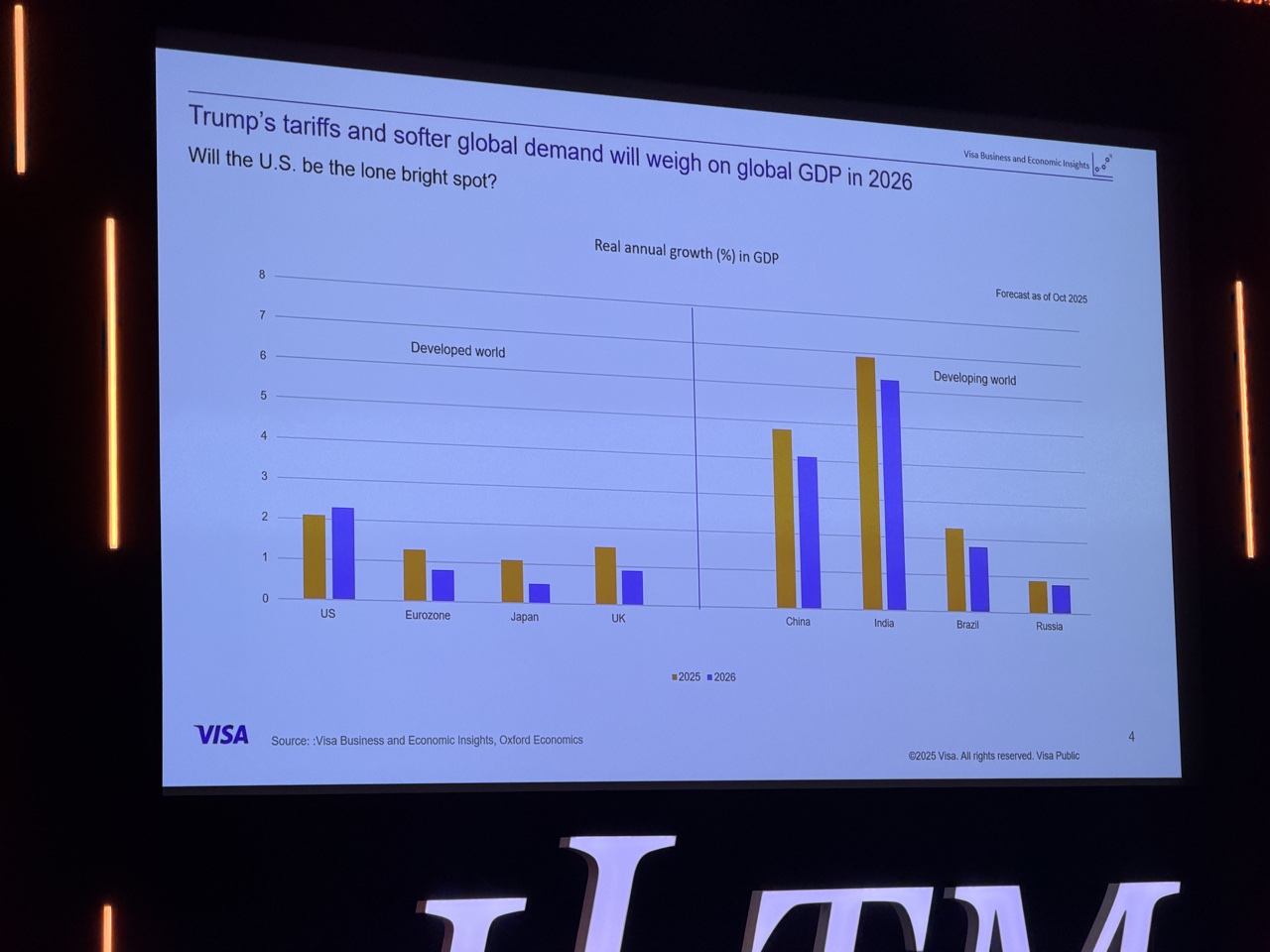
On the emerging side, India towers over everyone. Growth near 6% puts it in a different league from China, where expansion is still positive but clearly cooler than the pre-pandemic era. Brazil and Russia muddle through with low single digits.
For luxury travel, the message is simple. If you still build your business around European or Japanese growth alone, you are living in the past. The next wave of high-spending travelers will come from places where GDP charts still point sharply upward.
AI Money And The Semiconductor Tailwind
One of the more unexpected slides in a travel conference showed global private investment in artificial intelligence and the PHLX Semiconductor Index.
Since the release of ChatGPT, spending on AI infrastructure and data processing has exploded. Visa’s chart of semiconductor stocks looks like an aircraft taking off. That matters because high tech incomes and stock market gains often translate into premium travel, especially for the “I can work from anywhere as long as the Wi-Fi is good” crowd.
If your hotel has not updated its network since the BlackBerry era, this is your cue. The money sloshing around AI is real, and those knowledge workers will expect bandwidth to match their portfolio.
It’s also important to note, as Dr. Baptist outlined on stage, that the investment into AI is purely on the hardeware side at the moment. South Korea and the US are winning this right now, but that dramatic investment doesn’t translate into affluent worker spending. The economist suggested that may come in the future but affirmed that it’s not here now.
Where The New Affluent Live
Dr. Baptist then turned to households earning more than $100,000 a year. Indexing today at 100, the curves to 2030 are telling.
India, the Philippines and Indonesia show the steepest climbs in affluent households. Mainland China still grows, but the slope is gentler than the Southeast Asian rocket ships. Japan and Hong Kong move upward, yet at a noticeably slower pace.
For luxury travel brands, that is not a footnote. It is a new customer map. The affluent base that once meant “New York, London, Hong Kong” is expanding to “Mumbai, Manila, Jakarta” with real speed. The guest who checks into your Paris palace hotel in 2030 may be far more likely to have a Manila home address than a Mayfair one.
How Different Nationalities Actually Spend When They Travel
One of the most interesting slides broke down outbound spending by category in 2024. Accommodation, food and beverage, recreation and culture, transport, retail and “other” all stack up differently by country.
A few patterns jump out:
-
Indians love to shop abroad. Retail takes a chunky share of their overseas spend. The desire to bring back souvenirs and luxury goods is not subtle. If you sell handbags in Paris or watches in Geneva, you already know this.
-
Australians and Chinese are the most willing to spend overall. Their per-traveler outbound spend sits at the high end of the chart.
-
Japan and South Korea allocate more to accommodation and food, with a solid slice to culture and entertainment.
The fine print notes the growing importance of comfortable lodging and the desire to bring back Dubai chocolates, regional sweets and K-beauty products. Translation for hoteliers and retailers: the guest is not only buying a room. They are buying a suitcase full of stories and stuff.
Delivery Apps, K-Beauty Pilgrimages And Other Viral Behaviors
Visa also sliced into micro-behaviors that look small but say a lot about how people are traveling.
In the UAE, non-domestic cards show food delivery app transactions peaking around 8 PM. Deliveroo and competitors spike in exactly the same evening window. Travelers are not always heading out for long dinners. Many are ordering in, lounging by the pool and letting their credit card do the walking.
In South Korea, Visa tracked the share of travelers whose in-person spending includes cosmetics and skincare. High-volume markets like Singapore, Malaysia and Japan send visitors who reliably drop money on K-beauty. Lower volume markets such as Saudi Arabia or Poland are catching up.
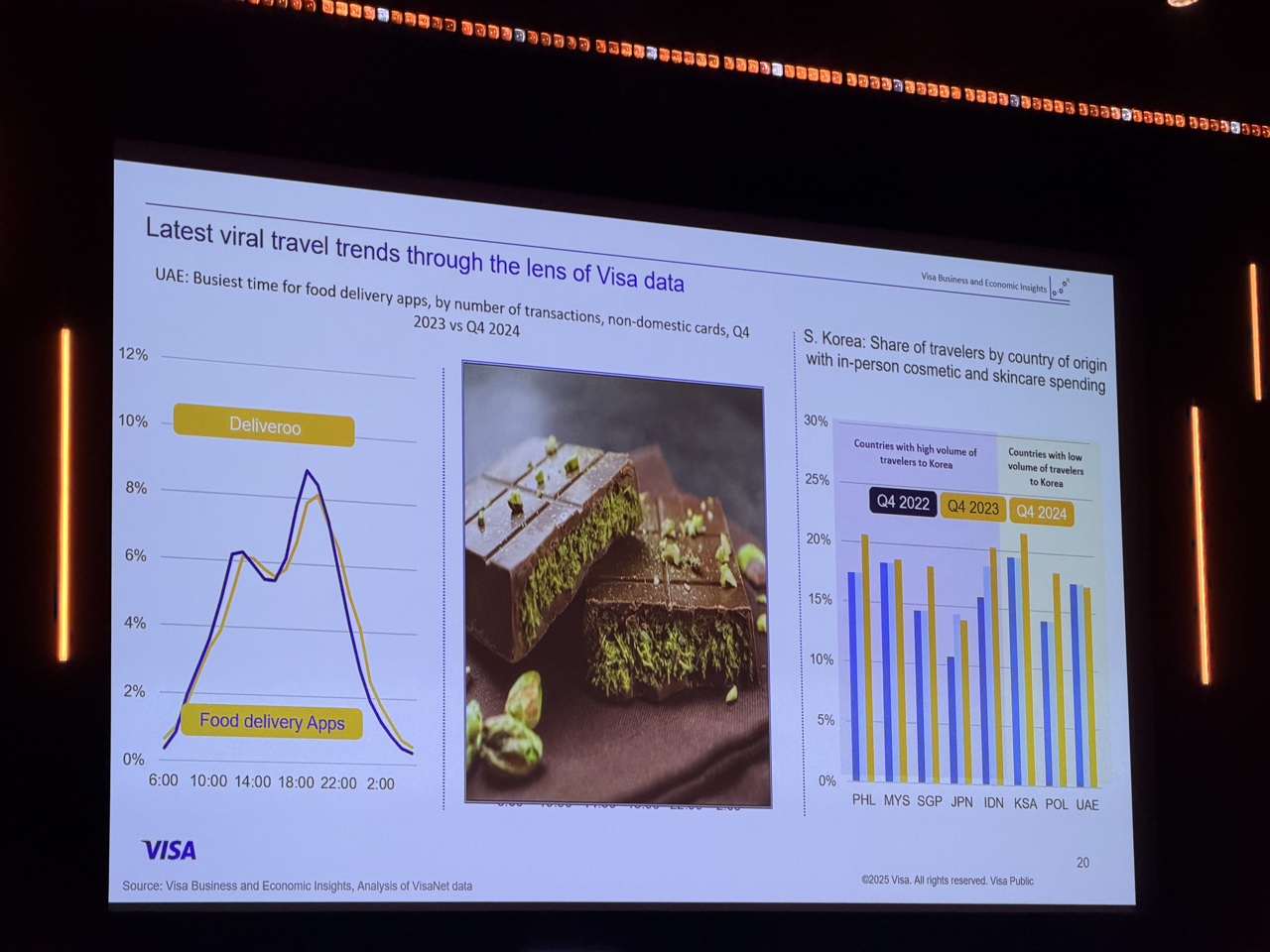
If your luxury property in Dubai does not have an easy handoff point for delivery riders, you are fighting the guest’s actual behavior. In Seoul, if you are not tying your stay to a curated K-beauty or skincare experience, you are missing what the cards say people are there to buy.
Luxury Is Not Just The Top 1%
Another set of charts segmented premium luxury spending by cardholder spend bands.
The top 1% still dominates, especially in Dubai, but the top 5%, 10% and even 20% of spenders collectively represent a large slice of the action. When Visa plotted elasticity of luxury spending against overall spend across Asia Pacific, the pattern was clear. As people get richer, they keep spending more on luxury, but the growth rate slows at very high income levels.
This is the classic “aspirational shopper” story. The person earning their first $50,000 above subsistence is more excited to splurge on a designer bag than the person on their fourth million.
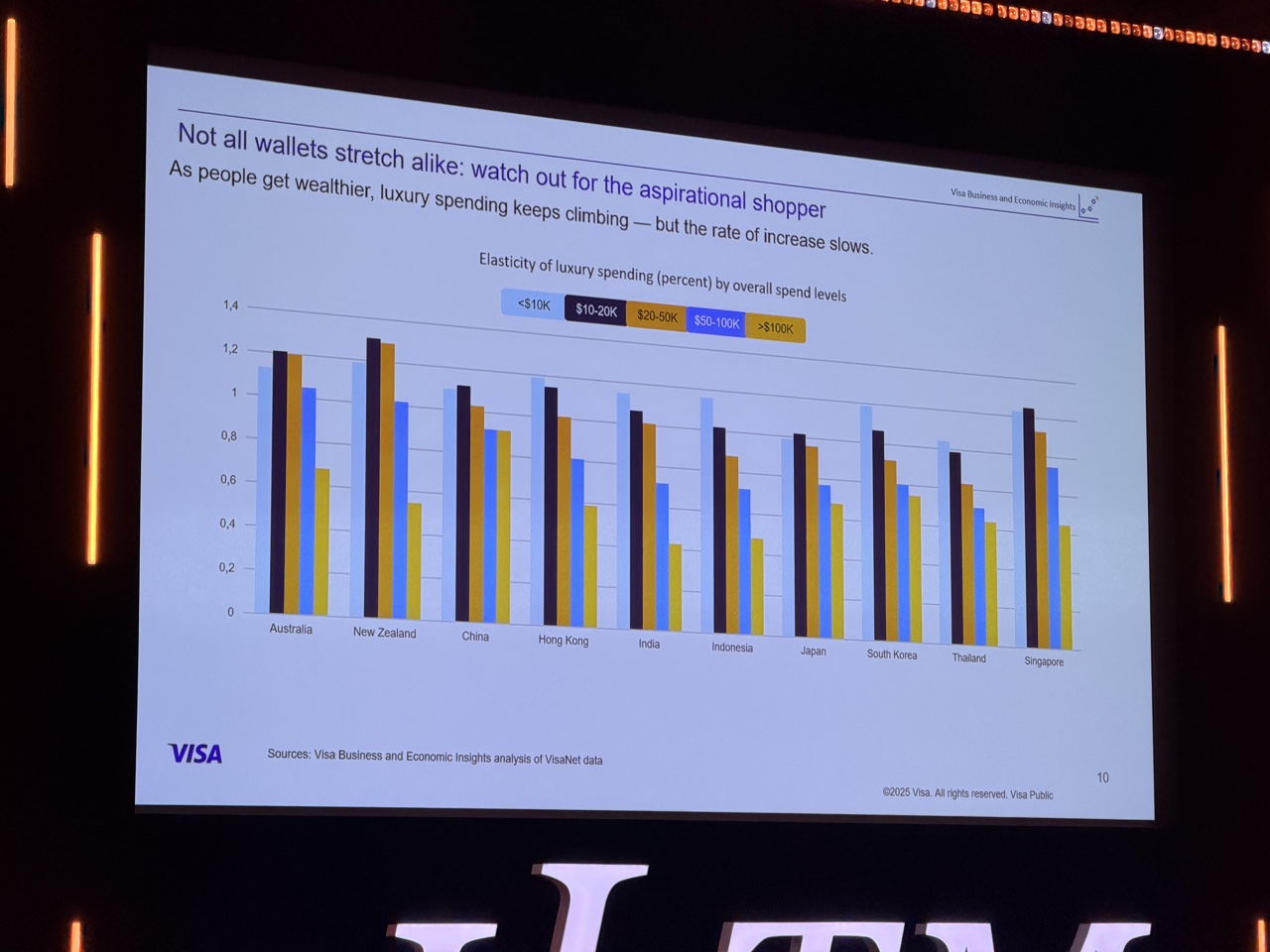
For luxury travel, that means products that speak to the rising affluent, not only the ultra-rich. Boutique hotels, premium economy with extra touches, nicely priced suites and entry tier club rooms all live in that space.
The Super Affluent Still Carry Outsize Weight
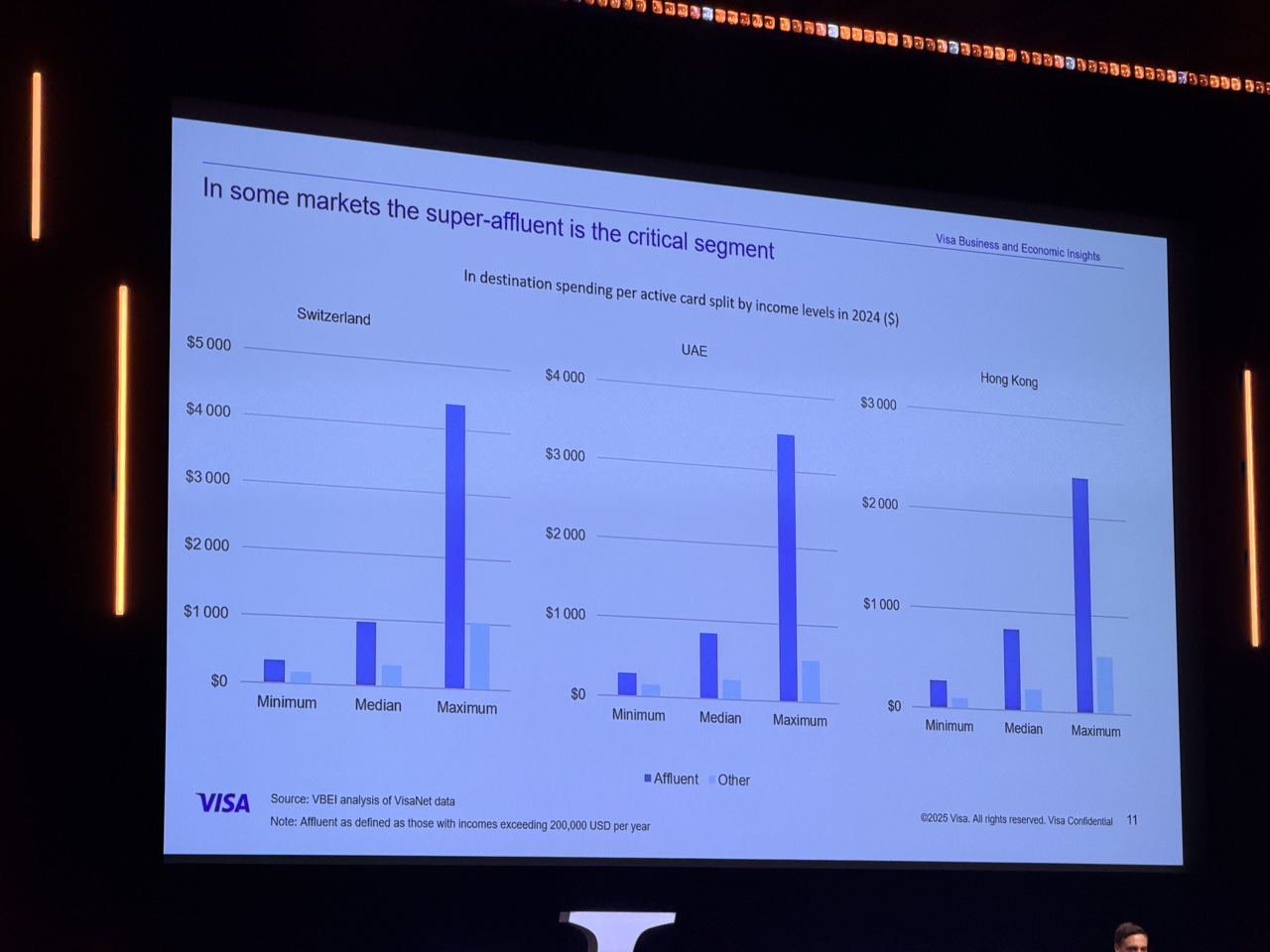
In Switzerland, the UAE and Hong Kong, Visa compared in-destination spend per active card for minimum, median and maximum income groups. Super affluent customers, defined as those earning more than $200,000 a year, tower over everyone else on the chart.
The minimum and median groups barely register. The maximum group shoots up to several thousand dollars per card.
If you run a hotel in Zurich, Dubai or Central, the message is simple. You may fill rooms with a range of guests, but your profitability still hinges on a relatively small group with very deep wallets.
Gen X And Boomers Are Still Paying The Bills
The economist also highlighted who is doing the spending by generation.
Affluent households spend almost three times more than non-affluent ones. Within that affluent group, Gen X and Boomers account for the majority of both households and total spend. Millennials are moving up, Gen Z barely appears.
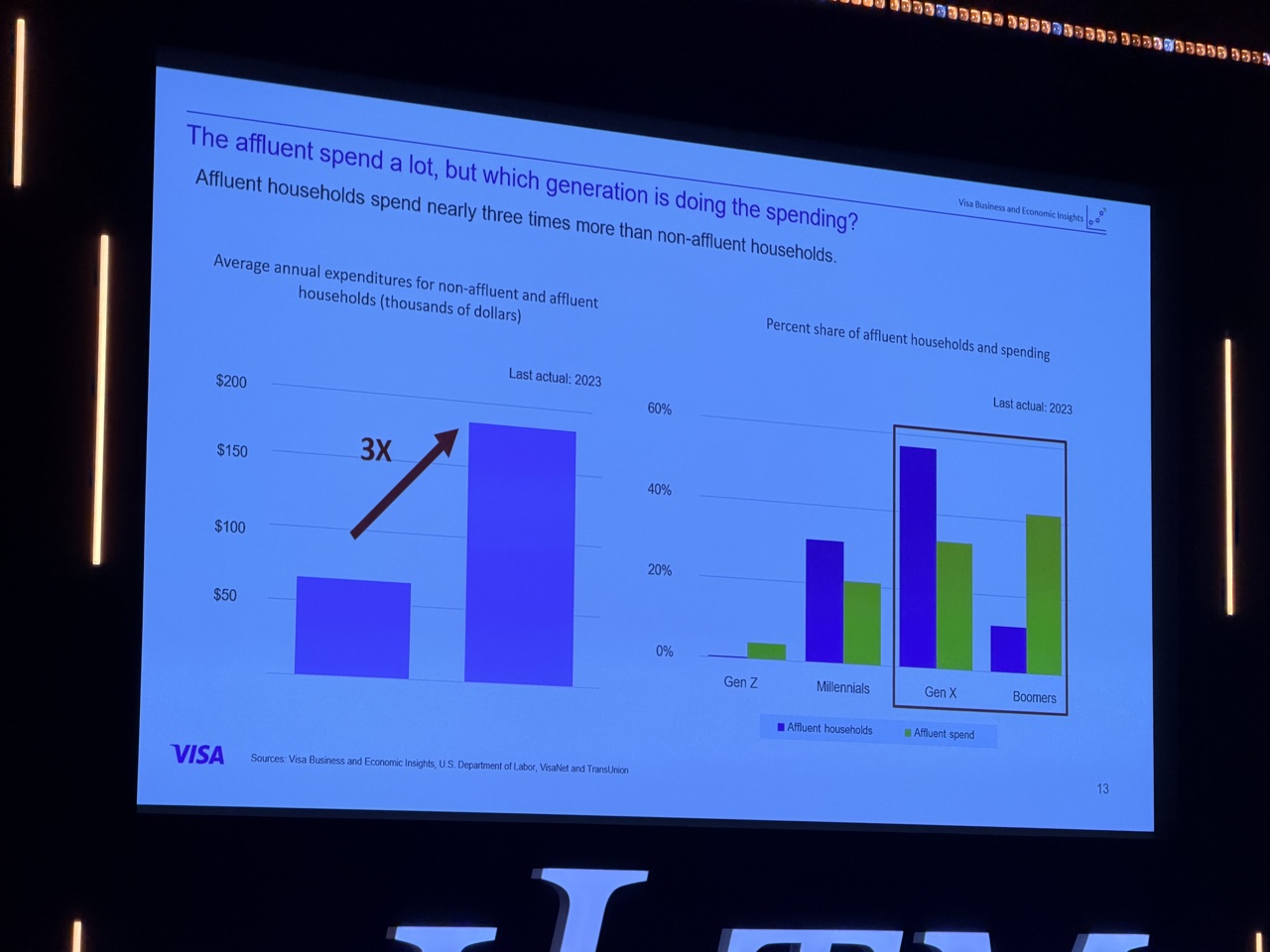
This matters when marketers insist that everything must be built around Gen Z content creators on social media. The card data suggests that the guests paying for suites, business class seats and private drivers are more likely to be Gen X parents and Boomer grandparents than TikTok influencers.
Politics, FX And The Chinese Question
Two sets of charts tackled politics, prices and currencies.
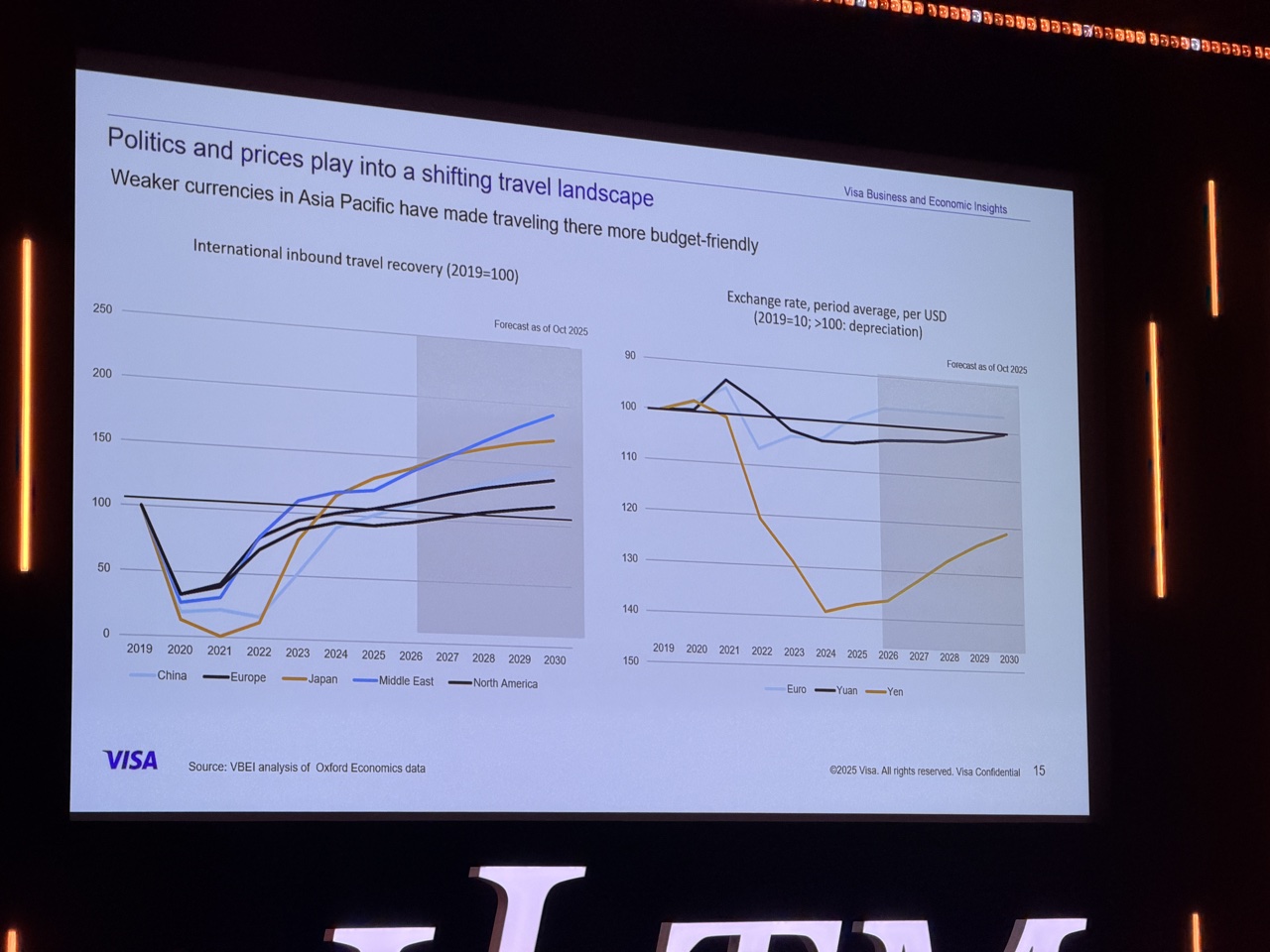
On international inbound recovery, regions like the Middle East and parts of Asia are forecast to climb above 2019 levels by the end of the decade. Europe and North America recover more modestly.
On the currency side, the yen has fallen sharply against the dollar since 2019, the yuan has weakened a bit, and the euro has drifted lower. A weaker currency makes a destination look cheaper to foreign visitors, which is one reason Japan feels like a sale right now if you are paying in dollars or euros.
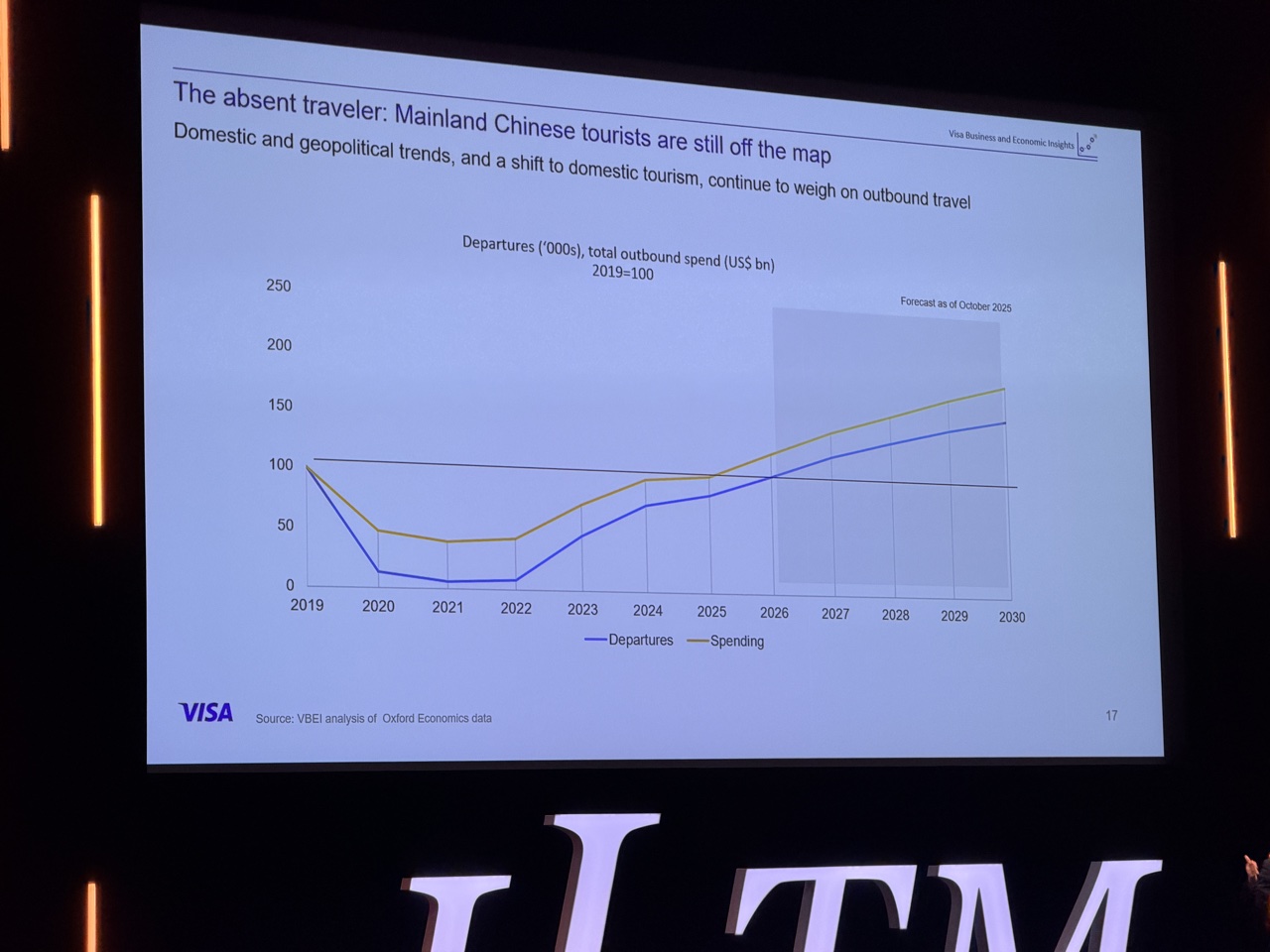
The wildcard is China. Another slide, titled “The absent traveler,” showed that outbound departures from mainland China collapsed in 2020 and have not recovered to pre-pandemic levels. Spending is coming back faster than headcount, but both lines are much flatter than you would expect from the world’s largest outbound market.
Domestic tourism, geopolitics and changing consumer preferences are keeping many Chinese travelers closer to home. Anyone still waiting for 2018 levels of Chinese group tours to thunder through European luxury boutiques may be waiting a while.
Where Affluent Travelers Are Going Instead
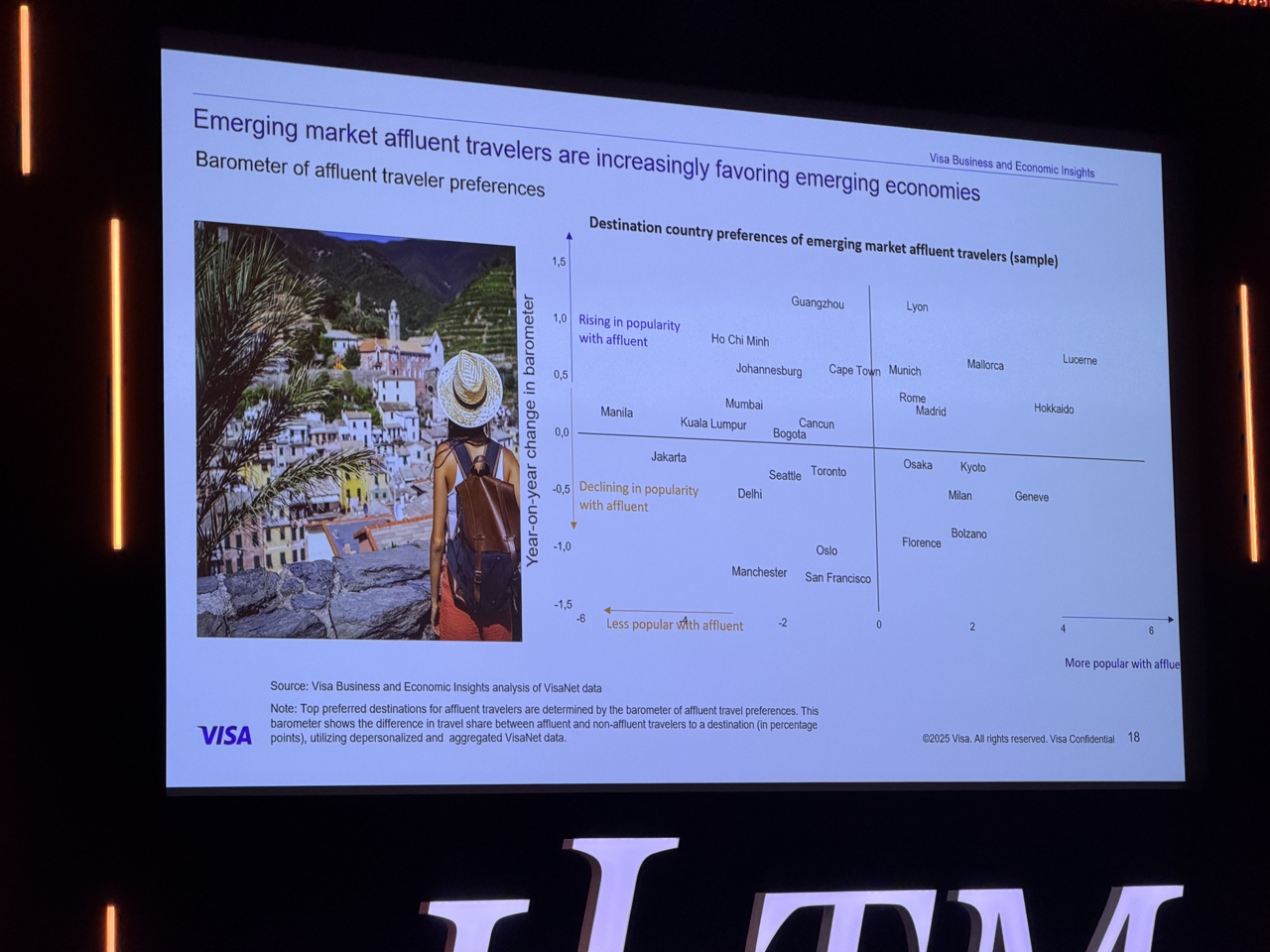
Using a barometer of affluent traveler preferences, Visa plotted destinations that are becoming more or less popular with high-spend travelers.
Rising with the affluent: Guangzhou, Ho Chi Minh City, Johannesburg, Cape Town, Mumbai, Kuala Lumpur, Bogotá, Cancún and Manila among others.
Declining with the affluent: cities like Osaka, Kyoto, Milan, Geneva, Florence, Bolzano, Manchester and San Francisco.
This is not a morality play, it is a math problem. Affluent travelers from emerging markets are increasingly choosing emerging destinations. The old triangle of Paris, London and New York will never vanish, but it now shares the stage with Cape Town, Ho Chi Minh City and Cancún in a much more serious way.
What All Of This Means For Luxury Travel
Put the slides together and a clear picture emerges.
The money that powers luxury travel is shifting toward India, Southeast Asia and other emerging economies. Within those markets, a growing band of affluent and “almost affluent” customers want comfortable hotels, convenient services and plenty of chances to shop. Gen X and Boomers still control most of the serious spend, while AI-driven wealth in tech adds another layer of high-income travelers who work wherever their laptop opens.
At the same time, currency moves and geopolitical shifts have made places like Japan and parts of Asia more affordable for foreign guests, while Chinese outbound travel remains structurally reduced. Emerging cities are rising in popularity with the affluent, even as some traditional European and North American cities slip a few notches.
For airlines, hotels and tour operators, Visa’s charts are not just economics. They are a blueprint. Where you choose to open a new property, which language options you add to your website, where you base your next sales trip and which amenities you prioritize can all be tested against what people are actually buying with their cards.
Conclusion
Visa’s ILTM presentation was a reminder that behind every luxury hotel lobby and business class cabin lies a river of transaction data. That data suggests a future where the center of gravity shifts toward India and Southeast Asia, where emerging cities compete head to head with classic capitals, and where Gen X, Boomers and newly affluent professionals from growth markets quietly underpin the high end of travel. For those willing to watch the numbers instead of only the Instagram feeds, the path forward is not mysterious at all.
What do you think?






Wow, another banger of a post from Kyle. Woohoo.
Glad we (in the US) are supposedly ‘resilient’ and that India is out-pacing China (in growth), yet, not ‘great’ to see Modi and Putin become buddy-buddy (yeesh).
So the ‘affluent’ are not just New York, London, Hong Kong; now including Mumbai, Manila, and Jakarta. Huh.
K-beauty pilgrimages to South Korea. LOL. Sure, why not. Great food, too. Tour some temples while you’re at it. Day trip to the DMZ. *gulp*
You bet Japan is ‘hot’ right now, especially for Americans, since the yen is down.
Oh hush. Kyle is reporting the information from some in the travel industry.
Ich muss sprechen!
A lot
Hähä (or en Espanol, jaja…)
I found this very interesting….food for thought. Thank you for reporting
WAY TOO LONG OF AN ARTICLE
I COULD CUT IT DOWN TO TWO SENTENCES
Why all the caps? No need to yell.