
Norwegian Air died and Norse picked up the bones. Now JPMorgan is shopping the airline, and your cheap Europe fare is on the clock.
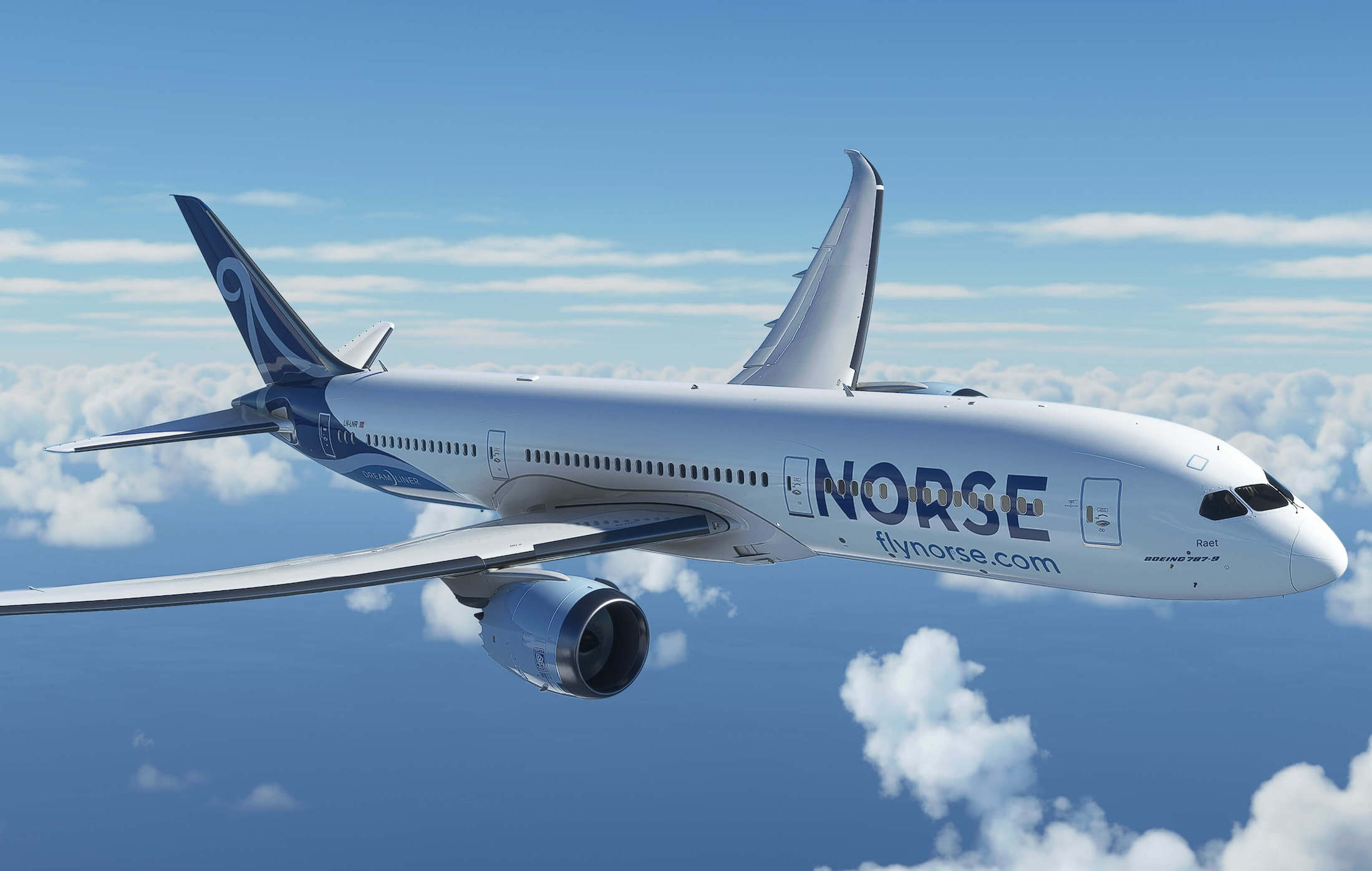
Norse Is Tiny. The Fares It Suppresses Are Not.
Norse Atlantic Airways carries a fraction of the transatlantic traffic that British Airways or Delta moves. But like other ULCCs even for those who do not fly them, Norse has an effect on every route it touches.
Reports this month indicate that Norse hired JPMorgan to run a strategic review, which in finance is the polite version of “for sale” though this could also mean it is open to a merger, partnership, or other alternatives. That follows the Los Angeles route cancellation Matthew covered last month, and confirms what the fuel-cost narrative only hinted at – this airline is in trouble.
When a low-cost competitor enters a transatlantic city pair, legacy carriers respond with shadow pricing. Their fully refundable, full-service tickets stay high. Their advance-purchase coach buckets quietly land within striking distance of the LCC. Remove the LCC and the buckets reset upward almost overnight.
We have a fresh control group for this. Spirit Airlines is gone, and baseline fares on former Spirit routes are projected to rise 20% to 25% within three to six months, per Dollar Flight Club data published in TravelPulse. The same dynamic, with bigger numbers, applies to transatlantic. JFK to London on Norse runs $250 to $350 one-way in summer coach. The next floor with BA, Delta, or United is closer to $400-600 one-way unless you are chasing a sale. That gap exists because Norse exists.
Potential Buyers Of Norse Atlantic Airways
This is the question every trans-Atlantic flyer should care about, because the identity of the buyer determines whether the fare suppression continues or evaporates. A short list, ranked by how seriously I would take a bid.
- IAG (British Airways and Iberia parent). Most likely. IAG has Heathrow and Gatwick slots Norse (Norse is predominately at LGW), and would inherit twelve 787-9s configured for low-cost long-haul much like its long-haul ULCC, LEVEL. It could be a perfect fit and even if the carrier was disolved, the fleet aligns well with the brand.
- Lufthansa Group. The brand tried this with Eurowings Discover, now consolidated back into Discover Airlines. Financially overstretched after the ITA Airways acquisition, but the 787s would fill a real fleet gap, and LH would love to push Norse capacity into Frankfurt and Munich. It’s still well within the carrier’s acquisition budget if the opportunity presents itself.
- Air France-KLM. Unlikely, but possible. Their LCC bet is Transavia, which only flies intra-Europe, and they have shown no appetite for long-haul discount since the Joon experiment died. However, French Bee has shown there is a market, and Air France/KLM recently announced it was realigning the brand to focus on broader markets than just France and the Netherlands.
- JetBlue. A long shot for a few reasons but maybe a long shot is what JetBlue needs, especially if it believes the future of the company is tied to trans-Atlantic operations. Even if it determines the 787-9 is too big for B6 to operate efficiently, but they could absorb two or three for the JFK to Heathrow play if the price is right.
- Alaska Airlines. The company has indicated it’s not looking for an additional merger. However, it bought Hawaiian nearly exclusively for the long haul capacity and the fact that it could expand internationally as soon as the deal closed. If Alaska bought Hawaiian for the equipment, surely this is a way to supersize its ambitions and grow from 12 long haul markets in the coming years to even more, and sooner.
- Private equity. Apollo, Carlyle, Indigo Partners. The math only works if the 787s come cheap and the airline is dismantled into a charter or wet-lease operation. Bad outcome for fare suppression on the existing routes.
- A Gulf or Asian carrier. Etihad or Qatar buying for the airframes. Brand goes away, routes go away, fares go up but they haven’t had any issue getting new airframes.
What Happens If No One Buys
Norwegian Air Long Haul went through exactly this process and the airframes ended up scattered across leasing companies. If Norse follows the same path, and twelve 787-9s hit the secondary market, mostly absorbed by AerCap, BOC Aviation, and SMBC. The routes either get picked up by legacy carriers at full-service pricing or get abandoned outright.
Transatlantic summer capacity drops by an estimated 3% to 5% on the affected city pairs. That sounds small but it is not. Transatlantic summer 2026 is already capacity-constrained because of Strait of Hormuz fallout and the resulting fuel reroutes. Remove another 5% on top of that, and the cheapest summer fares to Europe could move up by 15% to 30% for the 2027 booking season. However, in an upcoming post scheduled for later today, fare increases have not materialized this season.
The Math For 2026 And 2027
Norse is still operating, fares are still suppressed, and the strategic review will take months. The practical move has two parts.
For 2026 summer travel, some will book cheap Norse fare while they can. Credit card protections cover the basics though those will vary by departure point for European travelers and most should consider travel insurance. The downside risk is operational disruption, and opportunistic competitors already in the space. Assuming that 5% of the very cheapest seats disappear from the market, American and British Airways alone can absorb the missing space on their extensive London-New York schedule. They don’t have to touch their price point, demand will scoop up their current cheapest fares and push into higher fare buckets for traditional flyers.
For 2027 summer, I would not assume Norse will be there. It’s likely a more interesting and accessible market as long as it remains operating, and more choice for consumers allows some to choose itineraries based on schedule too. But Spirit has demonstrated that not all of carriers will be saved, even in the land of bailouts. Norse is not too big to fail.
Conclusion
Norse Atlantic Airways is more important to your travel budget than its market share suggests. The dirty secret of low-cost competition is that the savings show up on every ticket, even the ones you buy from the legacy carrier. JPMorgan running a strategic review is not yet a death notice, but it is a warning. Watch the buyer list closely. The right buyer keeps Europe affordable for another five years. The wrong buyer, or no buyer at all, hands the transatlantic market back to the same three legacy alliances that priced it like a fortress for thirty years.
What do you think?



“Their LCC bet is Transavia, which only flies intra-Europe“
Actually, it also flies to various MENA destinations as well.
Math is still not mathing for longhaul ULCCs.
If JetBlue ever got wide-bodies, they’d start with the A330-900neo (long shot they’d go for the A350-900). Think it’s a close to 0 chance they get Boeing wide-bodies since the training of A320 pilots to 787s is a year long process vs a week long process for A320 to A330.
Is Indigo Airlines in India not a possibility if they are currently leasing Norse dreamliners?
If they acquire Norse, they already have trained pilots and cabin crew for the 787.
Plus an order for a 350-900 placed now it’ll take around 5 years to be completed.
Remember that the fast-growing Indian ultra-low-cost carrier 6E already has an active, deepening relationship with N0. The Norwegian low-cost, long-haul airline has pivotally shifted its business model to lease out roughly half its fleet via ACMI (wet-lease) agreements, placing multiple B787-9 Dreamliners under long-term contracts with 6E to support their massive international expansion. Acquiring or taking a massive equity stake in N0 would grant 6E immediate control of widebody aircraft and a ready-made Western air operator certificate (AOC).
For aviation enthusiasts → The N0 aircraft featured in the article is a B787-9 Dreamliner (age: 8.9 years). Leased to 6E, it is currently parked at LHR.
Shocker! They owed me thousands for refunding tickets due to a FDA violation which cost us more money and since they have no customer service number , you have to only contact them through email ( chat bot)
So after 179 emails to them , I asked chat pt for advice to I publicly shamed their behavior and treatment of my family on docile media after a year or perusing then .
I just got my pay out .
I’m not quitter!!
Have flown with them this year to Bangkok and rebooked, both trips in premier, pleasantly surprised with what the product gives you. Good seats, service, meals and on-time performance. More importantly at a great price. If they go then the customer loses and pays a lot more. Best hope is British Airways incorporating into Gatwick Eurofly, replacing the Gatwick long haul operation. This would give them descent aircraft in comparison to geriatric B777 aircraft which will in years to come be replaced by new B777 aircraft. Gets rid of expensive flight deck contracts and staff who can go back to Heathrow. They can keep the Norse ethic and expand. To take as an example Barbados customers can have BA standards and price from Heathrow or Norse cheap and good soft product from Gatwick!
Maybe Aegean Air will buy them and I can get my direct LAX to ATH route back!
Would be nice to see Olympic Air return…