
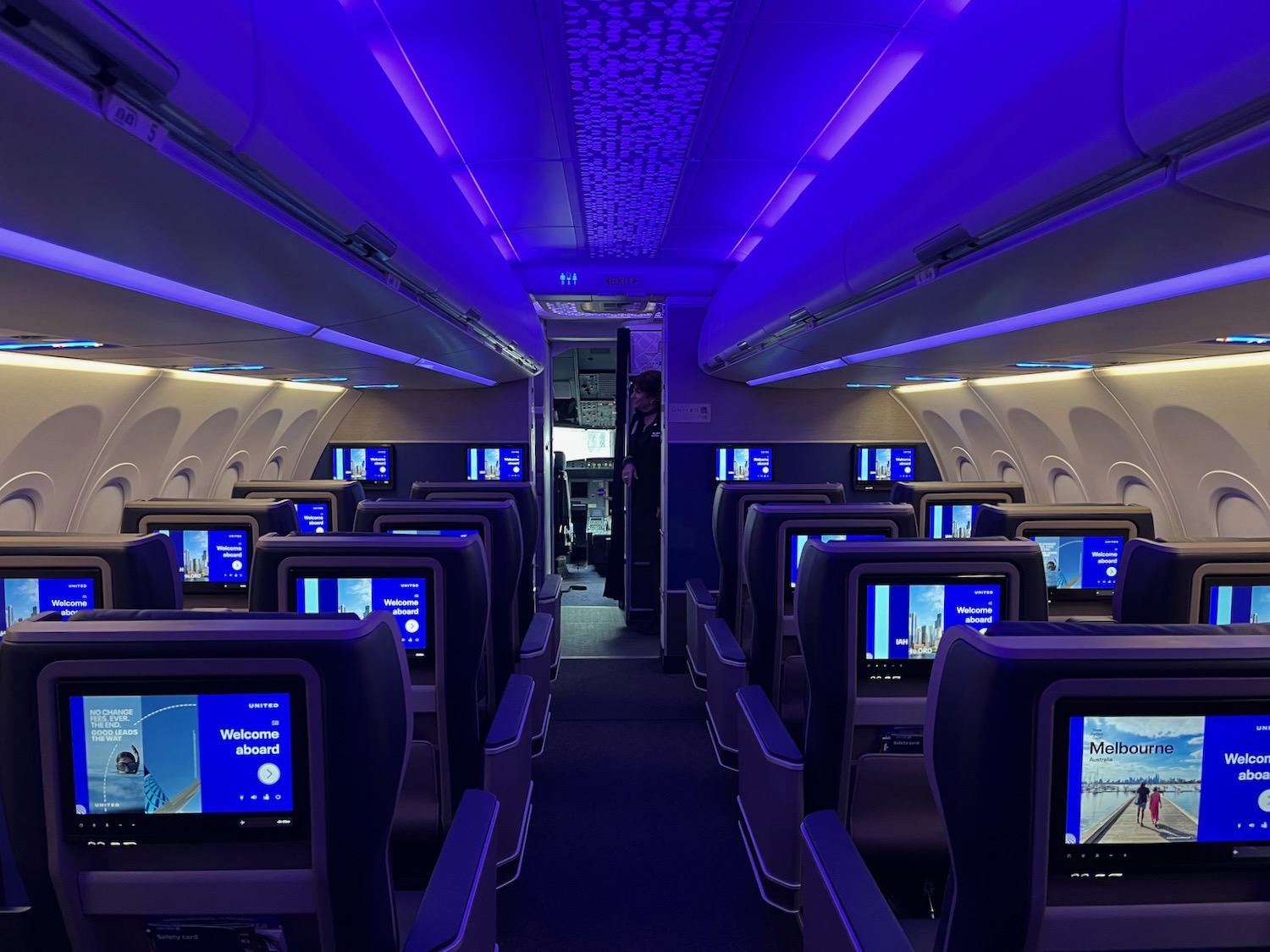
A United Airlines charter flight incident involving a Colorado Rockies coach in the flight deck raises two uncomfortable truths: the cockpit door rule on Part 121 flights is clear….but United’s sports charter culture may not have been.
United Charter Cockpit Incident Shows Rules Cannot Bend For Sports Teams
A strange United Airlines charter incident from 2024 is back in the news after two pilots were fired when a Colorado Rockies coach ended up in the captain’s seat during flight.
As One Mile at a Time has noted, the captain and first officer were terminated after video emerged showing a Rockies coach sitting in the left seat on a United charter. The captain says she had left the flight deck to use the lavatory and that the coach entered the captain’s seat without her permission. The first officer has now also spoken out, describing a charter culture in which he was told by both an experienced captain and charter flight attendant that leaving the cockpit door open and allowing team personnel into the flight deck was normal on sports charters.
That may explain how this happened.
It does not excuse it.
The Rule Seems Very Clear
Under 14 CFR § 121.587, the pilot in command of a passenger aircraft with a lockable flightcrew compartment door must ensure that the door separating the flight deck from the passenger cabin is closed and locked at all times when the aircraft is being operated, except when necessary to permit authorized access and egress under approved procedures.
A charter operated by a Part 121 carrier does not become a private jet just because the passengers are professional athletes, coaches, executives, or celebrities. If United is operating the flight under Part 121, the aircraft is carrying passengers, and the flight deck has a lockable door, the rule applies.
The door must remain closed and locked, with limited reasons to open it: pilot restroom breaks, authorized crew access, operational necessity. But that is not the same as leaving the door open as a convenience or hospitality gesture, and it certainly is not the same as allowing a passenger or team coach to sit in a pilot seat during flight.
I Like Open Cockpits. But That Is Not The Rule Here.
I have said before that I love the idea of cockpit visits. I like open cockpits. I like pilots welcoming children, avgeeks, and curious passengers before or after a flight. In a world without security threats, I would love to see a more relaxed approach.
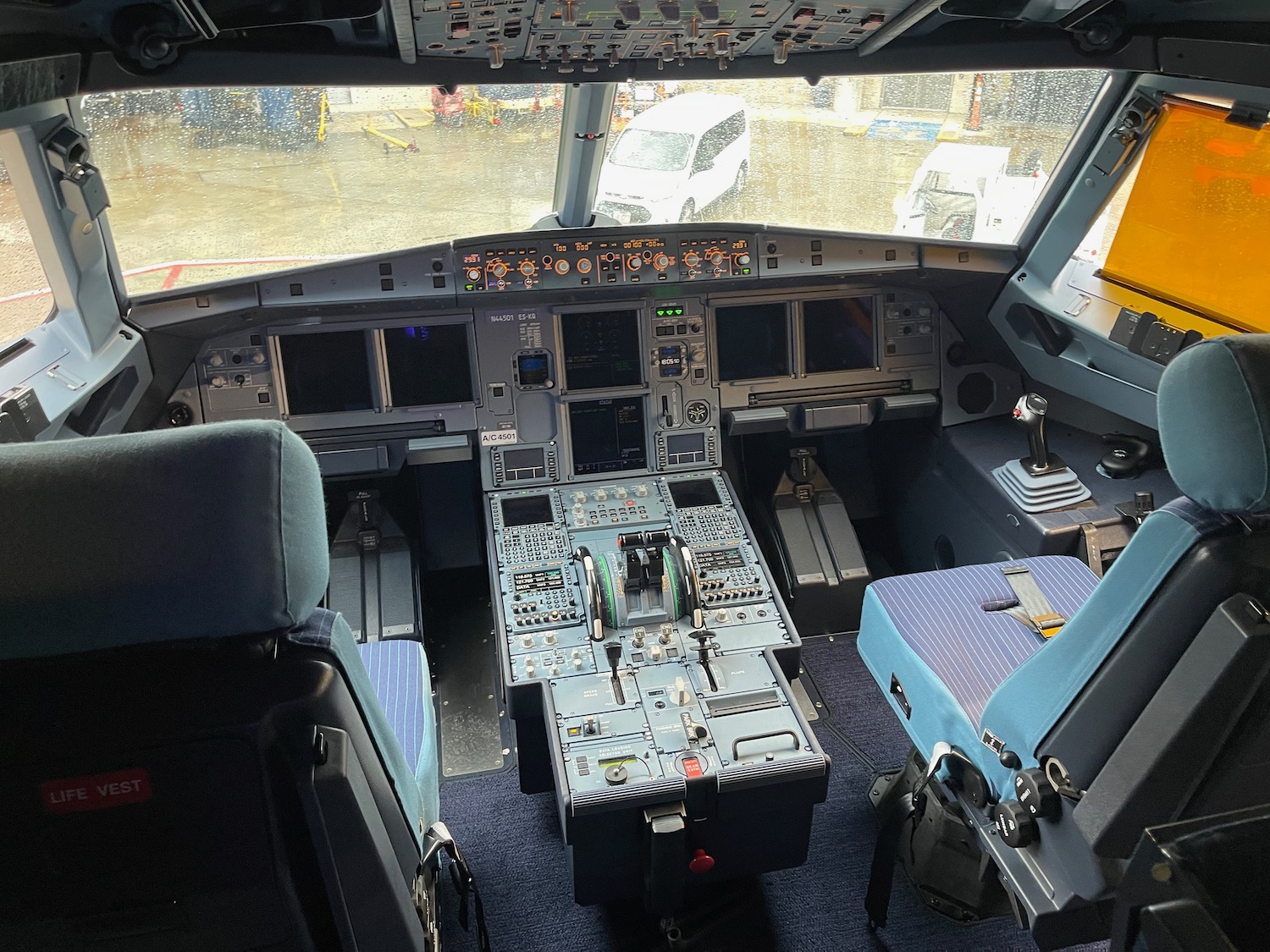
In some parts of the world, cockpit access rules are not as strict. And philosophically, if you charter an entire aircraft, I understand the argument that you should be able to create a more personal experience onboard.
But that is not the rule in the United States on Part 121 flights.
The rule is strict for a reason. We can debate whether post-9/11 cockpit security has gone too far in certain respects (I think it has), but pilots do not get to rewrite the regulation because the passengers are VIPs.
> Read More: Maybe It’s Time To Let Passengers Visit Cockpit Again During Flight…
The Pilots Should Have Known Better
I feel some sympathy for the first officer. He says this was his first sports charter, that he questioned the cockpit-door practice, and that both a highly experienced captain and a charter flight attendant told him this was normal. I can understand how a relatively new United pilot might hesitate when everyone around him acts like this is standard practice.
But he still should have known better…and the captain should have known better too.
This reminds me a bit of the “Code Red” logic from A Few Good Men. Why did the enlisted men get in trouble if they were following an order? Because at some level, they were expected to know that the order itself was unlawful.
Maybe that is not a perfect analogy, but if the cockpit door rule is clear, and the situation obviously feels wrong, the answer cannot be: “Well, that’s how sports charters work.”
No.
That is how bad safety cultures work.
But United Also Needs To Look Inward
I seriously doubt this was two rogue pilots.
The first officer’s account suggests something more systemic: charter crews, especially those working sports teams, may have operated under a different informal culture than ordinary passenger flights. If a lead flight attendant allegedly told the pilots that the cockpit door stays open on charters and team members come up to visit, that is not just a pilot problem. That is a United problem.
And frankly, this fits an uncomfortable pattern in airline charter operations. Sports teams and high-dollar clients can generate lucrative business, and the desire to keep them happy can warp judgment. We have already heard troubling stories in the industry about charter customers making inappropriate requests, including preferences for certain young,white, female flight attendants. When the customer is treated as too important to disappoint, boundaries can erode.
> Read More: United Airlines Faces Another “Young, White, Blonde” Charter Flight Lawsuit
At least under law, a sports team charter is still an airline operation..the safety rules are not optional.
Offer An Olive Branch, Then Make The Rule Crystal Clear
Based on what has emerged, I do think United should consider an olive branch.
If this was truly a systemic charter problem and not merely two pilots independently deciding to ignore clear rules, then firing only the pilots feels incomplete. Discipline may be warranted, but scapegoating is not accountability.
The better outcome would be something like this:
- Make clear to pilots that the cockpit door must remain closed and locked on all Part 121 flights, including charters
- Retrain charter crews, including flight attendants, on cockpit security procedures
- Make clear to sports teams and charter clients that the cockpit is not part of the hospitality package
- Review the discipline imposed on these pilots in light of whether United tolerated or normalized the practice
That would be a more useful response than pretending the problem begins and ends with two fired pilots.
CONCLUSION
The United charter cockpit incident is not complicated in one respect: a Rockies coach should never have been in the captain’s seat during flight, and the cockpit door should not have been left open on a Part 121 charter.
The law is clear enough. The pilots should have known better.
But if United’s charter culture allowed and even seemed to encourage this sort of behavior, then United needs to look beyond the two pilots it fired…not scapegoat them.
I like open cockpits. I like cockpit visits. I wish aviation were less sterile and more accessible, but that is not the regulations we live under.
United should make the policy crystal clear going forward and consider an olive branch to the pilots if they were punished for a broader charter culture that United itself allowed to develop.




I think the real question is whether blindly following assinine laws makes you an ass.
On a practical level, society only works if laws are obeyed scrupulously. Except that they are not. People break the law the whole time, and much of it is tolerated. Going at 70mp in a 65 mph zone is rarely questioned and I would hate to live in a society where you could lose your license for minor and harmless infractions. On a more contentious level, minor shoplifting is tolerated in certain cities as we all know.
On a philosophical level, I do believe that laws should only exist for the greater good. Shoplifting is obviously theft. Going at 70 is less obviously bad if the weather is clear and the road is empty but the justification for the rule is overall safety and the need for clarity in what the rule is. But this rule, in the case of the United pilots, appears to have no safety or honesty or ethical grounding. One suspects that the rule was improperly drafted in the first place and regulators are too lazy or frightened to change it.
So, yes, the sacking should be rescinded and the correct procedures should be reinforced explicitly, but also the individuals concerned at the FAA should face consequences unless they clarify when the rule should apply.
Team charters are a prestigious get, but at what cost? Teams should never be doing things that wouldn’t be acceptable elsewhere. Take a look at articles covering the condition of returned aircraft ( including LALF ) and ask yourself if these athletes deserve being near an open flight deck. It has become a slippery slope.
Just keep people out of the cockpit on these flights too. No relaxed procedures for the cockpit or when it comes to safety on the aircraft period!!! Give those pilots their jobs back! She self reported. No discipline is supposed to issued for that!
Please let’s continue to prioritize keeping cockpits safe! Otherwise, it’s not hard to imagine how terrible the consequences could be!
Even though almost twenty-five years have passed since the 9/11 tragedy, this chilling reality should never be forgotten → Some on this planet keep on seeing aircraft and airports as attractive targets, not only because of their potential for mass casualties, but also because of the profound psychological and economic disruption that airline attacks generate.
One wonders if there is another solution for the pilots that caught up in this. Will they be able to get equivalent jobs at another airline, perchance where the hiring airlines is doing a favor fir United? You can say they lost their jobs to make a point about these rules, but, wink, wink, they landed on their feet.
That is not how the industry works. If they do get a job with another airline (even if one does a favor for UA, which I doubt will happen) they will be at the bottom of the seniority list. That is a big pay cut, especially for the captain. A new first officer will have it a bit easier, but getting a job after being fired from a major airline will not be easy (barring the possible “favor”).
Who wrote this garbage? News for you, I passenger jet for a 121 airline that is ferried between cities with no passengers is operated under part 91. Just because the airline is a certified 121 carrier does not mean all operations are conducted under 121. Charters are operated under 135.
“A charter operated by a Part 121 carrier does not become a private jet just because the passengers are professional athletes, coaches, executives, or celebrities. If United is operating the flight under Part 121, the aircraft is carrying passengers, and the flight deck has a lockable door, the rule applies.”
You’re a smug person. I did my research and believe you are incorrect.
The specific rule is 14 CFR § 121.1, which establishes the applicability of Part 121 to any air carrier conducting “supplemental operations”.
Under FAA definitions found in 14 CFR § 110.2, “supplemental operations” specifically includes any commercial air transportation of passengers or cargo that is not a scheduled operation, such as a charter.
Because United Airlines holds a Part 121 certificate and uses large turbojet aircraft (typically with more than 30 seats), its charter flights fall under these supplemental rules rather than the Part 135 rules used by smaller on-demand jet services.
The FAA maintains a public list of legal Part 135 holders. United Airlines is not on this list because it does not hold a Part 135 certificate…sorry, but you’re wrong.
This was the very point of my article – if UA operates under 135, then the same (strict) cockpit rules do not apply. If you are right and I am wrong, then these pilots did nothing legally wrong (though may have broken UA’s written rules, which can go further than FAA rules).
Your move…
You are absolutely incorrect. We operate on a regular basis empty from the US to Asia in the freight industry. Those flights are still operated under FAR121. Operating FAR135 requires an entirely different operating certificate and set of regulations.
Our company does VIP/sports charters and they are treated like any other passenger flight.
Thank you.
Laws and regulations are only one part of the picture, though, because there’s also the matter of company policy to consider. If a pilot can’t be trusted to do things by the book, then they’re a liability. There’s no room for mavericks or rule-benders in commerical aviation, everything has to be done strictly according to company policy, the aircraft operating manual, and the law. Failing to do-so invites disaster.
UA charters are operated under Part 91.
Part 91 governs private, non-commercial general aviation flights where passengers cannot pay for their transportation…
My opinion! This has been going on openly, that’s why the door of the cockpit was left open This is not a first time incident. I work for the United States Gov’t. The reason for “Laws & Rules are to keep everyone safe! Not just VIPs
U chose to risk breaking laws or rules, U face the consequences. It only takes one time for a safety breach all because PEOPLE breaking them for personal or whatever reason they make themselves. They knew better! Good they lost their Jobs!! Next???
Point has been made, certainly won’t happen again across the whole industry; now have some civility, some compassion, and let the pilots have their jobs back. What more can be gained for being so heartless? They’ve endured the embarrassment and loss of pay, that should be enough.