
First it was Spirit Airlines. Now a wider group of budget carriers reportedly wants billions in federal relief. The White House and Congress should flatly reject this.
Budget Airlines Want A $2.5 Billion Bailout
According to The Wall Street Journal, several low-cost and ultra low-cost airlines are pitching the Trump administration on a $2.5 billion relief package tied to rising fuel prices and mounting financial pressure. The request reportedly includes:
- Spirit Airlines (this we already knew)
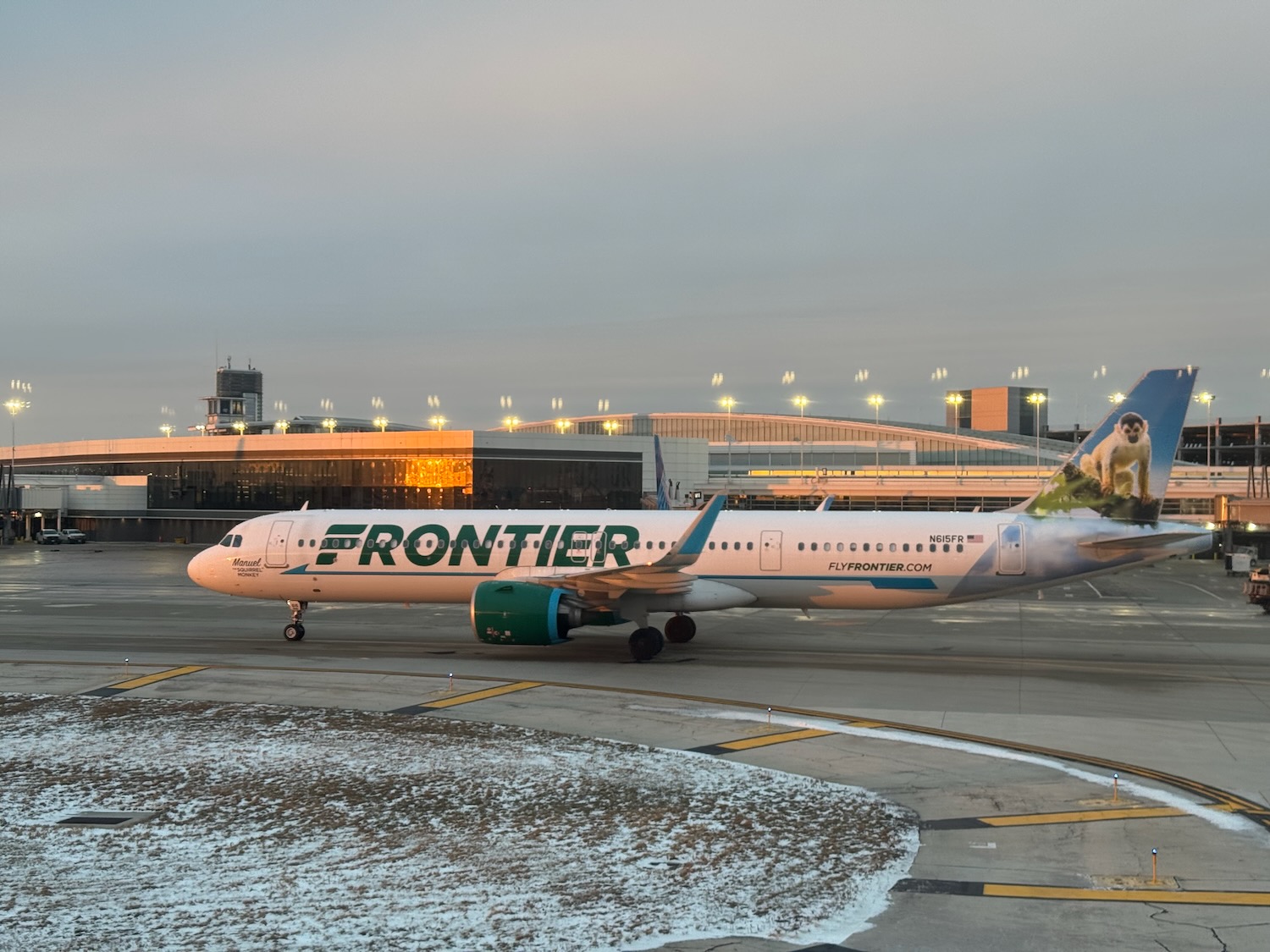
- Frontier Airlines
- Allegiant Air
- Sun Country Airlines (merging with Allegiant)
- JetBlue
The $2.5 billion represents the combined additional outlay in fuel costs these carriers are facing in light of the Iran War.
At this outset: that request should be a non-starter.
Airlines operate in a cyclical business. Fuel prices rise and fall, as does demand. Recessions happen. Geopolitical shocks happen. Every airline knows this when it buys aircraft, signs labor deals, adds routes, and markets cheap fares.
If a carrier cannot survive normal industry volatility without taxpayer support, that is not a public emergency…it is a flawed business model.
Fuel Costs Are A Business Risk, Not A National Crisis
Fuel has always been one of the largest airline expenses and how an airline operates is a strategic choice.
Some airlines hedge fuel. Some maintain stronger cash reserves for rainy days. Some diversify networks with premium cabins, corporate contracts, cargo revenue, loyalty programs, or international flying. Others compete primarily on low fares and ancillary fees, as we see with the bottom-feeding ultra-low-cost carriers in the USA.
That is a strategic choice. When fuel prices rise, airlines can cut capacity, raise fares, trim schedules, defer growth, or seek private capital. But they “learned their lesson” in 2020 and now run to Washington when the cycle turns against them (and one can hardly blame them for trying, especially in an election year).
There was a legitimate case (not that I supported it) for extraordinary support during the pandemic, when governments effectively shut down travel demand overnight. But I hope we can all agree that is not what this is.
Private Profits, Public Losses Is A Bad Deal
These same carriers aggressively market low fares while charging extra for carry-on bags, checked bags, seat assignments, priority boarding, itinerary changes, and other add-ons. That is their right. But if airlines keep the upside during profitable years, taxpayers should not be forced to absorb the downside during difficult ones.
This is the familiar corporate welfare model: privatize gains, socialize losses. And once one industry receives help for higher fuel costs, where does it end? Should trucking companies receive aid when diesel spikes? Should delivery firms receive aid when shipping costs rise? Should cruise lines receive aid when fuel rises?
Markets involve risk. Businesses are expected to manage it in a flourishing market with thoughtful regulation aimed at preserving transparency, fairness, and competition.
Let Weak Airlines Restructure Or Merge. Let Government Focus On Debt…
If some carriers are no longer viable, bankruptcy exists for a reason. So do mergers, asset sales, fleet reductions, restructurings, and liquidation. Aircraft and gates do not disappear. Many employees would likely be absorbed elsewhere over time. Capacity would shift to stronger operators or surviving competitors.
That process can be painful, but it is healthier than keeping structurally weak airlines alive through repeated subsidies. Consumers also benefit from sustainable competition, not fragile carriers that survive only through periodic government rescue.
Can we be real? The cheap fares on Spirt and other budget U.S. carriers are underwritten by shareholders…they have been the ones subsidizing these cheap fares for years as those budget carriers perennially lose money. Why should they? Why should the government?
Why is the budget market successful in Europe and not in the USA? Labor, taxes, and fees all contribute, but part of me thinks it is just a systemic pricing issue. I think Kyle is 100% wrong on the government’s “moral” obligation to save Spirit Airlines, but I think he’s correct that airfare remains statistically cheaper than it has ever been…maybe too low?
The network carriers lose money flying, but subsidize those losses through lucrative loyalty programs…something none of the carriers listed above can match. I love the concept of Spirit Airlines and I love making flying available to the masses, not just the wealthier among us.
But how can we prop up a business that cannot make money in the best of times?
You know what the real “moral” obligation of the government is? To manage the nation responsibly, just like each one of us must responsibly manage our households. Debt is out of control and the last round of bailouts fueled years of inflation that has hurt the entire economy. We don’t need billions of additional dollars added to our unconscionable budget deficit and staggering national debt to save a flawed business model.
CONCLUSION
The budget airline sector has brought lower fares and valuable competition to the U.S. market. But lower fares do not create a permanent claim on taxpayer money and after years of losses, even in the best of times, it seems these low fares were unsustainable from the start.
Higher fuel prices are part of the airline business. They always have been. If these carriers cannot navigate that reality, they should restructure, shrink, merge, or fail. They should not ask taxpayers to bail them out. The current industry-wide bailout now being floated should disgust every American.




I spent an extra $300 on gas in the last 2 months, where’s my check?
Hey Matthew,
per Kyle’s story yesterday. Do you think taxpayers have a “Moral” obligation to save Spirit Airlines? That was a rather bold use of morality and ethics on your website.
Max, did you read this story? 😉
Kyle was gettin’ roasted yesterday (here and elsewhere)! I say, kudos to him/you for speaking your minds and taking the heat, regardless. Keep it goin’, fellas!
Yes, Kyle and I chatted and my disagreement with him is with the highest respect.
Touche…. I read it and I knew your opinions from other articles 😉
but I was curious about the use of “morality” in his story.
nbd. Thanks! Great to have you back on Monday!
There’s nothing wrong with anyone pitching our government to support them in times of need; however, the people, through our elected representatives, are supposed to deliberate and legislate such ‘assistance’ whether for individuals or companies. Instead, what seems to be happening is that a few business ‘leaders’ are pitching the ‘king’ for a hand-out. Now, if the President were to ask Congress on behalf of those companies for specific legislation, as in the past, that’d be one thing (the right way to do this). Yet, this is something else; this is the President thinking he’s a king (which is ironic, because it’s nearly 250 years since we discarded that notion, and the literal King of England is visiting Washington this week). So, think, if a Democrat did any of this, you must know how Republicans would go-J6 again.
agreed. It shouldn’t be bailout by Fiat. It should (and is legally supposed to be since Congress owns the power of the purse) be a congressionally authorized bailout, if there is one — which there should not be, in my opinion.
Exactly. And I highly doubt this Congress will agree on it (or much of anything.) 190 days until the Midterms. Overdue for some changes.
Your King allegation makes no sense on its face. If Trump were a king and wanted to do airline bail-outs, he would have already done it, correct? That’s what kings do – what they want, when they want, how they want.
I said ‘thinking he’s a king’… even actual Kings, like Charles, are not as efficient or powerful as you suggest. Maybe in DPRK, Little Rocket Man is more like a ‘king,’ or just simply a dictator. Bottom line: In the US, our Constitution says Congress does the money. So, let’s follow the law.
Side note: Ryan, did you ever call former President Obama a tyrant (aka a king, but with bad connotation)? If you’re a supporter of the current President (Trump), I’m gonna go out on a limb, and assume, you probably opposed aggressive use/misuse/abuse of executive orders, especially when they hurt things you liked.
REthuglican socialism for the rich, predatory ruthless capitalism for the poors. Where’s my tariff refund?
Sorry, Marv, those refunds are all going to Commerce Secretary, Howard Nutlick. We used to criminalize such blatant corruption. Maybe after we vote again in about 190 days, we’ll bring back such accountability.
Exactly. I hope the next administration puts the Lutnick family in prison…such wicked graft.
Ah, yes, I believe it is actually ‘Lutnick’… bah!
We’re going to need an official ‘truth and reconciliation’ period after all this is finally over. Like, the concept of ‘transitional justice’ to account for these periods of corruption, conflict, repression, akin to what societies in Africa, Asia, Latin America, and elsewhere are more accustomed to (see, Rwanda, even Ethiopia, though, of course, I hope things never get so bad as those incidents/periods.)
Failing to say no outright to Spirit has clearly created a moral hazard. What’s going to prevent American Airlines to make the same claim?
Looking deeper it seems the real reason is for the US Govt to eventually own Spirit, rename it, and use it exclusively for transport of US personnel…which they are doing now to a lesser degree.
You say multiple times here that these weak airlines should be allowed to merge. Yet you gloss over the fact that Spirit tried to merge with JetBlue and was blocked by the government.
So if that government isn’t allowing a business to do what is in its best interest in order to stay alive, is the only option failure?
Yes.
This is not surprising at all!
Incidentally, the F9 A321neo in the article’s photo is 2.8 years old.
“The U.S. has become the hardest place in the world to run an Ultra Low Cost Carrier.” – Skift Research –
Allegiant needs no support: their stock ALGT had several share-buybacks in the last 2-3 years totalling over $100 million. No taxpayers money should be handed over until all the bought-back shares have been sold again on the open market
True. G4 has strong liquidity and is not currently in immediate danger of bankruptcy. 2026 is considered a “reset” year for G4 to focus on its core airline business, improve margins, and manage high capital spending, making its outlook speculative but not disastrous in the short term.
After 9/11 there were several airlines that got bailouts and paid the government back, with interest. Some, like National got nothing because they were not capable of operating at a level where they could ever pay back their loans. I’m conflicted, I don’t want good airline people to lose there jobs, but, in the case of Spirit, they probably weren’t gonna make it before this idiotic war. I’m just glad that sham airlines like “New” Pacific aren’t around to try to claim money.