
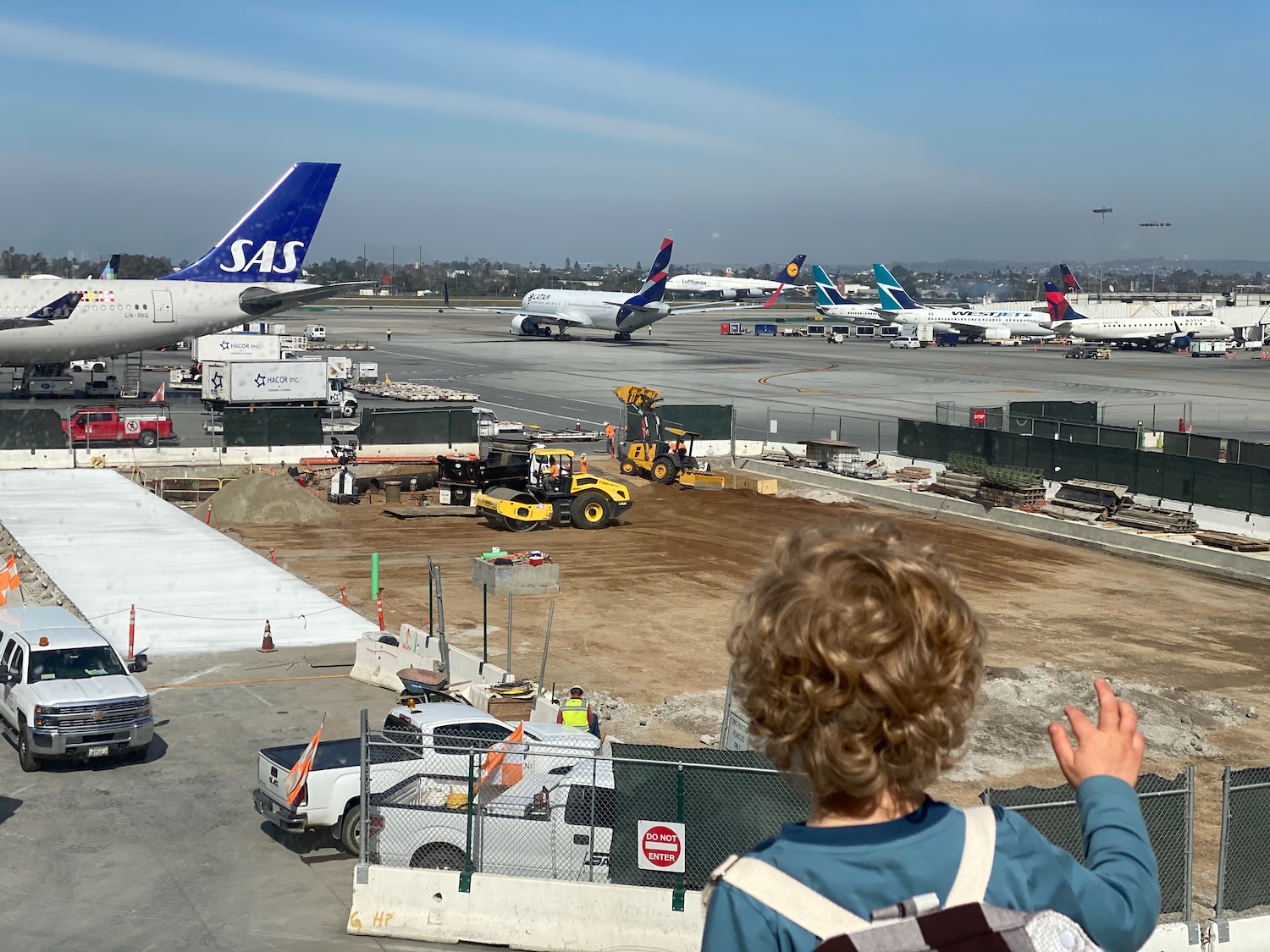
When Ethiopian Airlines Flight 302 crashed in 2019, killing all 149 passengers and 8 crew members onboard, the response was swift and overwhelming: the 737 MAX was grounded worldwide. Yet in the U.S. we reach the same death toll on our interstate highway system every 24 days and hardly give it as second thought. What does this say about our risk tolerance?
Why We Fear Flying But Accept Much Greater Risks On The Road
I read an interesting guest essay on Friday by Craig Fuller in the New York Times focused on trucking, an industry that quietly kills thousands of people every year on American roads. Roughly 5,000 people die annually in crashes involving large trucks, a number that has climbed significantly over time.
That’s hardly a small number and yet it barely registers in the public consciousness…do you fear being killed by a truck on the highway? I don’t think I’ve ever even thought about it.
There are no viral videos or wall-to-wall cable news coverage or sweeping congressional hearings after each tragedy. Life goes on.
We Are Terrible At Evaluating Risk
Air travel remains extraordinarily safe. Modern commercial aviation has reached a level of safety that would have been unimaginable a generation ago.
But when something goes wrong, even a minor incident, it dominates headlines.
A near-miss becomes national, even worldwide, breaking news. Even a diversion becomes a viral moment. Every tragic accident becomes a defining event that reshapes public perception for years.
Meanwhile, thousands of people die on highways every year, often in preventable accidents involving fatigue, poor training, or systemic incentives that prioritize efficiency over safety.
And we accept it like it’s no big deal.
Aviation incidents are dramatic, concentrated, and visible.
When something happens, it happens all at once, in one place, often with catastrophic consequences. It is easy to understand and impossible to ignore.
Trucking accidents are the opposite.
They are dispersed and incremental: a steady drip rather than a single event.
Even though the cumulative toll is far higher, it never quite reaches the same level of urgency.
That shapes how we regulate and how we respond. It fundamentally shapes how we prioritize safety.
The Importance Of Incentives
The trucking industry is built around efficiency.
Drivers are often paid by the mile, not by the hour. Time is money. That builds pressure and creates incentives that can quietly erode safety over time.
Aviation, by contrast, is built around redundancy and risk mitigation. Pilots are not paid more for cutting corners (at least I hope not!). Airlines are not rewarded for shaving minutes off a flight at the expense of safety. Quite the opposite.
Entire systems exist to prevent small mistakes from cascading into disasters. And when something does go wrong, the response is immediate…and overwhelming.
Aviation has internalized that small risks and near misses…the industry studies them obsessively, learns from them, and adjusts.
That is why flying keeps getting safer. It is not so much because aviation is inherently less risky than trucking as it is because the industry treats risk differently.
What We Choose To Worry About
We fear flying because it feels out of our control. By the same token, we accept driving because it feels routine and like we are in control.
But the numbers tell a different story.
The risk we accept every day on the road is far greater than the risk we fear in the air.
And unless I am missing something, until we start thinking about risk in a more rational way, we will continue to overreact to rare events and potentially underreact to common ones.
CONCLUSION
The biggest risks are often the ones we normalize. In aviation, we obsess over safety and demand perfection. In other parts of transportation, we perhaps tolerate far more risk than we should.
Humans as a whole are not very good at judging risk and until that changes, we will keep fearing the wrong things.





Let’s remember one more time that air travel is statistically the safest form of transportation, significantly outperforming cars and trains. People are far less likely to die in a plane crash than a car accident, largely due to strict global regulations, advanced technology, and multiple backup systems. Although some still fear flying, these fears are largely unfounded. Media coverage of accidents can exaggerate these events, overshadowing the reality of air travel safety. So, viva air travel!
Here’s where public transit (and self-driving vehicles secondarily) can really step up to the plate, in terms of creating meaningful risk reduction for driving. (Much as I actually personally enjoy driving, I would absolutely be ready to hand the reins to say, a Waymo today)
Self driving cars stepping up to the plate? Don ‘t you mean “ driving up to the plate? Best not to use cliches of any kind and use your own thoughts. Have a very pleasant day.
It is worth adding that, nationwide, the probability of dying in a plane crash is approximately one in eleven million, while the probability of dying in a car crash is approximately one in ninety-five.
I agree with the sentiment but surely no way one in 95 people die in car crashes in the USA
Right. I question that too. Doctor, what is your source?
Here’s a source, Lifetime odds of death for selected causes, United States, 2024:
https://injuryfacts.nsc.org/all-injuries/preventable-death-overview/odds-of-dying/
“Jason Wong” already answered your question before I could.
I think the difference is that when people fly, they are relinquishing their own control to the airline. When driving, you at least reserve some (albeit not 100%) control over your fate. That may he part of why we scrutinize air travel more.
As someone who drives for work often, I have thought about being struck by a semi. I give them several car lengths of space and always defer to them when changing lanes as I will be the loser in case if a collision.
I agree that industry should be looked at. It creates perverse incentives for the drivers. Nobody needs 24 hour delivery that badly.
In deep respect to the memory of the 346 people who lost their lives in the two similar B737 MAX 8 crashes that led to the global grounding of the B737 MAX!
I live and surf in Australia. Everyone worries about shark attacks but the danger in driving to the beach is infinitely higher than the chance of being a shark victim.
Fact is we are fascinated by plane crashes (and shark attacks). Can’t solve for it.
Noting that car crash deaths are negligible compared to even more boring heart attack risks
Yes, good point on heart attacks and the crazy way so many people eat/drink.
I think I once heard a stat that your in more danger from death by coconut drop than sharks.
Fact: Cows kill more people than sharks.
Me: I didn’t know cows killed sharks at all.
Matt, you’re really on a roll with ‘statistics’-based hot-takes lately! Bah. Yes, statistically, flying is safer than driving… Also, statistically, airfares are low… But, tell that to someone who witnesses a violent plane crash, or an ‘explosive’ increase in fares relative to expectations.
Cars have turned America so ugly, and to your point, dangerous. It is bankrupting cities, isolating the elderly, and helping make millions of Americans fat. Despite no speed limit on the Autobahn, you are four times less likely to die in a car crash in Germany. So despite being so car-centric, our population has some of the worst training and poor infrastructure.
Ultimately, there are plenty of people that realize this though. Check out Not Just Bikes on YouTube to get caught up on the dozens of reasons car dependency is a plague.
That’s why any pilot myself included will always say the scariest part of the job is the ride to the airport. Especially with some of these hotel van/shuttle drivers.
More people die from Covid or saturated fat than from airline crashes. Yet many mock Covid vaccines and masks. About 1,000 people a week die from Covid-19 in the U.S.
Same issue with nuclear power. People overindex on single large, newsworthy, rare events they have no control over vs routine risks that are much higher over time in comparison.
This brushes on a topic that’s personal to me which is mass cheap labor immigration “cutting corners” to save money. Google “immigrant truck drivers cheating cdc exam” and you’ll look at trucks on the road in a whole new way…
The difference between the 737 max incidents and regular deaths on the freeways isn’t exceptional but also a bit like comparing apples and oranges. There are scandals in automobile technologies as well such as the Chevy Cobalt ignition switch where Chevy’s culture of cost cutting and lack of oversight resulted in a critical and avoidable deaths where a 50 cent ignition switch failed killing all electrical functions in a car including the airbags and steering while in motion. This is different than regular accidents such as driver’s sliding on icy roads or rubber necking.
Certainly where gross negligence either in operator or manufacturers result in needless deaths they are addressed such as speeding, drinking and driving, and so on and criminal prosecution occurs. Indeed, it’s a scandal that nobody served prison time for the 737 Max tragedies.
As you probably know, Germany is a LOT tougher on driver safety than in the USA perhaps because USA car culture expects democratically that EVERYONE should be behind the wheel because bus and train transport is so poor here. (Thank you automobile corporate lobbyists!). It can be quite difficult to discuss why the USA has this car culture compared to other countries.
In the case of planes, it’s not considered a “civil right” requiring cutting corners to make it even more inexpensive and convenient than it already is. Imagine, say, if the airline industry lobbied to 10X more airports to be built, cut back on certifications, and instead of driving an 2 hours to visit a friend you could fly there from one small airport to another for $20.00. Sure, there would be small planes crashing regularly but the price one pays, you know?
Too many cars, too many people, too much congestion. Probably hundreds of thousands without insurance and driver’s licenses. All combined, it’s not hard to believe why there are so many accidents and deaths on the road.
Fair argument. Where and how to start are a bit more problematic though. There’s apparently some strong evidence that non-Tesla autonomous vehicle taxis are notably safer than human driven vehicles. Perhaps begin a study on truck accidents to go after the low hanging fruit?
“do you fear being killed by a truck on the highway? ”
Yes, because I understand mass and velocity. I give them lots of space.
I get your point fear of flying in general, and continued fear of the Max (I always tell my flight-nervous spouse that driving to the airport is our biggest risk), but the initial Max grounding is not a great example for highlighting our inability to weigh risk. There was a flaw in the combination of the plane’s systems and pilot training that needed to be identified and addressed or it probably wasn’t going to stop at two jetliners going down. The DC-10s cargo door latch system only brought one plane down, right? Still plenty safe on a per-mile basis compared to driving.
“Yes, because I understand mass and velocity.”
I almost spit out my coffee on this one. Thanks for the laugh!
The 737 Max tragedy was largely an institutional issue rather than technical similar to Richard Feynman’s famous analysis of the Challenger tragedy.
What happened with the Challenger was that NASA management were increasingly under pressure to understate safety risks to keep political support and maintain a grueling launch schedule. Engineers and whistleblowers were silenced particularly on the private industry side at Morton Thiokol. In the end, nobody in management was ever submitted to criminal charges much less punished.
A similar thing happened with the 737 Max: Quick and dirty corporate profits overrode quality and craftsmanship that (used) to mean “If it’s Boeing, I’m not going” to cutting corners. Highly skilled engineers were laid off requiring a retrofit of the aging 737 fuselage instead of a proper re-engineer. The resulting unbalanced airframe introduced a minor safety hazard (possible stall) and then a software fix to override the pilot at the controls.
Then, to make things even BETTER (or worse), management outsourced the software to India meaning the safety of millions of westerners was reliant upon $15/hour programmers in an “agile” methodology. What’s Agile you ask? Why! I’ll tell you! It’s about designing something clunky and then using it for a while and then “fixing” the flaws in the next iteration rather than getting it right the first time.
In software engineering, normally, that means your web browser crashes but they fix it in the next release. All well and good when it’s ONLY a web browser crashing.
The 737 Max is sub-par engineering. A blight upon what was once a leading edge worldwide company.
THEN it was further compounded by management selling the 737 Max as a “no change” upgrade to airlines in that they understated the inbalance risks and the “software” fixing it for them.
Note that this software fix meant when a sensor failed, the plane flew into the ground. Literally. Again, “agile” thinking. “Old school” Boeing engineers would have caught that. They wouldn’t have agreed to ship such a hack. From the top to the bottom at Boeing, including the sales engineers who did, quote, “Jedi mind tricks” on FAA regulators, they pushed out the junk and kept the profits.
Dennis Muilenburg, CEO of Boeing, walked away with $62 million dollars after the greatest scandal in USA aviation history. Note: He messed up. He’s responsible for 346 people dying. He never served a day in prison or charged. He made more in LEAVING as a failure than we earn in a lifetime.
This is worthy of rumination.