
Delta chose Amazon Leo over Starlink for its next-generation onboard Wi-Fi, and Elon Musk now claims the deal fell apart over something as mundane, and yet potentially very important, as the login portal. But there’s something more going on here than simply choosing the best internet provider.
Did Delta Make A Mistake Choosing Amazon Leo Over Starlink?
Delta Air Lines recently announced that it would bring Amazon Leo, Amazon’s low-Earth-orbit satellite internet network, to 500 aircraft starting in 2028.
That move was a bit of head-scratcher because Starlink is a proven technology already has airline customers, including United Airlines, Alaska Airlines, Hawaiian Airlines, Qatar Airways, Air France, and others. United plans to install Starlink across its entire fleet by the end of 2027, meaning United may have next-generation connectivity across its entire fleet before Delta even begins installing Amazon Leo on roughly half of its fleet.
That has led to a lot of head-scratching. Why would Delta, an airline that has generally led the U.S. industry on free Wi-Fi, pass on Starlink and wait for Amazon Leo?
One theory is according to Ron Baron, an early investor in Tesla and SpaceX. He says the issue came down to Delta’s insistence that onboard internet access sit behind its own Delta Sync-branded portal.
Elon Musk then weighed in on X, saying that SpaceX requires Starlink to work without what he called an annoying portal:
Musk wrote:
“Not exactly. SpaceX requires that there be no annoying ‘portal’ to use Starlink. Starlink WiFi must just work effortlessly every time, as though you were at home. Delta wanted to make it painful, difficult and expensive for their customers. Hard to see how that is a winning strategy.”
Musk being Musk, the last line should be taken with the appropriate truckload of salt. Delta is not trying to make Wi-Fi “painful, difficult and expensive” for passengers. Delta has been a leader in offering free onboard Wi-Fi to SkyMiles members, and there is no reason to think Delta wanted to reverse course and begin charging for Starlink.
But the portal issue is still interesting.
This Is Not Really About Free Versus Paid Wi-Fi
The easy take is that Delta foolishly chose branding over a better passenger experience.
Maybe.
Starlink is clearly the most proven low-Earth-orbit inflight internet product right now. It works amazingly fast with low latency and is already flying on commercial airlines. Amazon Leo may turn out to be excellent, but Delta is betting on a network that is still ramping up and is not expected to be installed on Delta aircraft until 2028.
But I am not convinced Delta choosing Amazon Leo is necessarily a mistake in terms of the product itself. Amazon is not exactly a sketchy company. Leo may very well become a very competitive Starlink alternative, and Delta’s existing relationship with Amazon Web Services probably matters here. We’ve heard that Delta chose Leo over rivals in part because of its existing AWS relationship.
The real issue strikes me as less about the satellite and more about who controls the customer relationship.
That is where Delta Sync comes in.
Delta Wants The Portal Because The Portal Is Valuable
Delta’s industry-leading profitability in the U.S. is not just about flying airplanes better than others. It is tied to loyalty, credit cards, premium revenue, customer segmentation, and data. Inflight connectivity is a digital touchpoint, a fingerprint that is worth a lot of money in terms of data.
When a passenger logs into Wi-Fi through Delta Sync, Delta knows who that passenger is, where that passenger is sitting, what that passenger might be eligible for, what offers can be shown, how that passenger interacts with onboard content, and how that experience can be tied back into SkyMiles and broader merchandising.
Translation: value.
United understands this too. Its media network is called Kinective Media, and it is designed to use United’s customer data to sell targeted advertising across United’s digital channels. That is the direction the industry is moving. Airlines do not just want to transport you. They want to monetize the relationship around you.
So when people say, “Why does Delta care so much about the landing page?” the answer may be: because the landing page is not just a landing page, but the front door to Delta’s onboard digital ecosystem that has made it a profit leader.
United May Have The Better Near-Term Passenger Product
That said, Delta still faces a real competitive problem.
United is moving quickly with Starlink. If United really does have Starlink across its full fleet before Delta begins meaningful Amazon Leo installations, that will be a passenger-facing advantage…a true advantage over Delta’s, whose current high-speed Wi-Fi is great, but hardly high-speed compared to Starlink.
Fast, low-latency, simple, free Wi-Fi matters. It matters even more as more passengers expect to work, stream, message, browse, and stay connected gate-to-gate. Once people experience Starlink onboard, slower or less reliable systems feel dated very quickly.
Delta has benefited for years from having free Wi-Fi while United was still piecing together a less consistent connectivity strategy (that still fails). But that gap may soon flip. United may go from laggard to leader while Delta waits for Amazon Leo to mature.
But I Understand Why Delta Would Not Want To Surrender The Customer Interface
I am not a Delta apologist unlike one of my favorite readers. I also think Delta can be obnoxiously arrogant about the value of its brand. Sometimes Delta acts as though calling something “premium” makes it premium. But in this case, I at least understand the strategic logic.
If Starlink insisted that service must bypass Delta Sync or diminish Delta’s ability to control the passenger interface, Delta may have seen that as too high a price. Not because the logo matters so much, but because the data and customer relationship matter so much.
The airline business is increasingly a loyalty and data business that happens to move people through the air. Delta knows that. United knows that. American should know that (though one sometimes wonders!).
So the question is not simply: why did Delta choose Amazon Leo over Starlink? The better question is: how much near-term passenger experience should Delta sacrifice to preserve long-term control of its digital ecosystem?
I don’t know the answer to that right now, but Delta still strikes me as the “steady wins the race” airline and while it may not be industry-leading in terms of Wi-Fi speeds, it hopes it can remain industry leading in profitability while still offering a great Wi-Fi experience onboard.
In that sense, Delta’s move makes perfect sense to me. It’s not in the business of providing the best Wi-Fi to its passengers: it’s in the business of making money and has (reasonably, it seems) determined Amazon Leo perpetuates that goal best.
CONCLUSION
Delta may have made a mistake passing on Starlink, particularly if Amazon Leo slips or if United’s Starlink rollout makes Delta’s current Wi-Fi look obsolete by comparison. But this is not as simple as “Delta chose a branded portal over better Wi-Fi.” The portal is the product in some ways. It is where loyalty, personalization, advertising, SkyMiles engagement, and customer data all come together.
Musk is right that passengers want Wi-Fi that just works. He is also self-interested and predictably dismissive of Delta’s business logic. Delta is right that control of the customer relationship matters. It may also be underestimating how quickly passengers will notice if United offers a much better onboard internet experience.
Amazon Leo may turn out to be excellent (I suspect it will). The product decision may not be the mistake, though the timing might be. And if Delta spends the next few years protecting Delta Sync while United passengers are enjoying fast, seamless Starlink across the fleet, that could be a very expensive lesson in the difference between owning the portal and owning the passenger experience. But I do think Delta knows what it is doing here and is making a choice that has clear commercial advantages for its profitable business model.






you get it better than other sites, Matthew, but you still conflate Delta Sync with Viasat vs. Starlink vs. Amazon Leo.
Delta Sync is available on Viasat equipped aircraft – and DL has far more seats w/ Delta Sync than UA has with Starlink or its in-flight products.
DL already has a viable product. Leo will be faster.
DL will no more be at a disadvantage when UA completes Starlink installations in 18 months – almost 4 years after they announced it which is hardly fast – than UA was at disadvantage for the 5 years that DL had free high speed WiFi when UA had at best a T Mobile system on 4 different WIFi providers.
If you’d like to tell us the size of UA’s disadvantage then and now, then we can start talking about a fractio of the disadvantage that DL will have going from Viasat/Hughes to Leo a few months after UA
Isn’t the point that Delta was never going to change for Wi-Fi, but wanted to mange the intake page in a way that Starlink would not allow? I don’t mean to be confusing with my use of Delta Sync…my point was simply that Delta needs more access to data in order to remain so profitable. It was not willing to sacrifice that for faster internet on a shorter time horizon.
I don’t know at all if that is true or not – and neither do you.
I can very much believe that some companies are so protective of their customer data and relationship that some things that appear to be attractive really are not.
and I do think that Kyle is right that Amazon wanted a blue chip customer to take on Starlink and DL already has a product that works. Starlink might be faster for a very short period of time but it won’t be near as long of a headstart that DL had over AA, UA and WN in high speed WiFI.
This is all a battle of the billionaires and far too many people act like they are taking sides that they will win.
Bezos and Musk aren’t sharing anything w/ anybody.
Amazon has a far better track record not just for consumer products but also IT.
High speed satellite internet is a much bigger growth market worldwide that they both need to be in.
DL happens to be confident enough in what it already has and in Amazon that they don’t need to be the 101st airline with Starlink.
DL has long zigged when the rest of the industry has zagged and that has served them very well.
5 years from now, some people will pretend they never said the things they did about the in-flight internet wars that they ahve said
You act like Delta has 100% coverage with amazing wifi… but they still have a ton of 717s with unusable wifi.
I have never said that DL has 100% free high speed WIFI coverage.
I have said that they have more aircraft serving more of the world w/ free high speed WiFi than any other airline in the world.
People who love to nitpick about what DL doesn’t have never bother to admit that “their airline” has hundreds fewer aircraft w/ free high speed coverage than DL – and yet we are supposed to think that the scores of aircraft on which DL CURRENTLY does not have coverage on will remain so forever and that smaller number is supposed to offset the much larger number of other airline aircraft – in the hundreds per carrier – that don’t have it.
DL has a proven prototype for the 717s with Hughes WiFi. They will either install Hughes on the 717 fleet after the summer or retire the fleet rather quickly.
I believe we may be missing the fact that Amazon will take every opportunity to best Musk and might have incentivized Delta to make this happen.
Add in the reasons you point out and this was a semi easy decision for Delta.
It’s a very true point that Amazon may have added incentives for Delta so sweet that was difficult to turn them down, as Delta becomes somewhat of a flagship launch customer for Leo.
What films will you stream?
Hopefully not mine, lol.
There is a lot of conversation about Untied wifi leapfrogging over Delta. I think a lot of people overlook that the Viastat-3 F2 satellite will go live any day now, delivering Starlink-like speeds (Viastat claim) to the entire Delta fleet immediately – United currently has 40 mainline jets with Starlink. If real world Viastat F2 speeds are slower but comparable to Starlink, that is more than enough to keep Delta competitive until Leo installs start in 2028.
This is a good point.
False. You cannot get the same latency offered by low earth orbit satellite constellation with a higher orbit satellite, simply impossible. If you’re conflating “speed” with throughput, who knows, but only one of these products actually exists. You’re all acting like this was some wise business decision, no, delta was just being belligerent, they didn’t want Starlink branding, and Starlink walked away.
You are confusing bandwidth improvement with download speed and latency which Viasat’s high orbit satellites can’t match Starlink. That is the whole reason Delta is hoping Amazon LEO (low earth orbit) will be functional in two years plus for 50% of their fleet.
And the whole argument that the ‘portal’ being of any significant value is questionable at best. Starlink allows airlines to engage, personalize, advertise, and data mine without encumbering the log in process which by all accounts is amazingly quick and easy on United flights. Sorry, the portal dog don’t hunt. In fact branding of a cumbersome log-in process has the potential to be quite a negative. This is a competitive grand slam for United.
While always on hustle culture might tell us otherwise, most of us have enough redundancy built into our jobs that we can handle working offline for a few hours while we are in the air. This is much ado about nothing.
Very difficult for me because I try to maximize the offline part on the ground so that I can be fully online in the air.
Can’t take my kids to the park or cook or go to gym while on a plane!
That is exactly the time/productivity management philosophy we should all embrace!
I wonder what Elon thinks about AS/HA’s new T-Mobile logon/”portal” page when connecting to Starlink.
Having to watch T-Mobile and Atmos ads before logging on is annoying, painful, and makes the whole process more difficult.
A huge downgrade from OG HA’s Starlink page.
He probably doesn’t care as its unlikely to have anything to do with why the deal didnt happen with delta
As is known, SpaceX’s Starlink dominates the aviation market right now with an operational fleet, while Amazon Leo represents a future-focused choice with rollout commitments beginning in 2027–2028. The airline industry is split based on deployment timing, hardware requirements, branding control, and existing corporate tech ecosystems.
Reportedly, Amazon Leo operates slightly higher (~590-630 km) than Starlink (~340-550 km). This means Amazon can cover larger geographic areas with fewer satellites but may have slightly higher latency compared to the closer Starlink constellation.
If Amazon Leo truly aims to compete with Starlink, it should target the maritime (especially cruise) sector, just as it has targeted the airline industry.
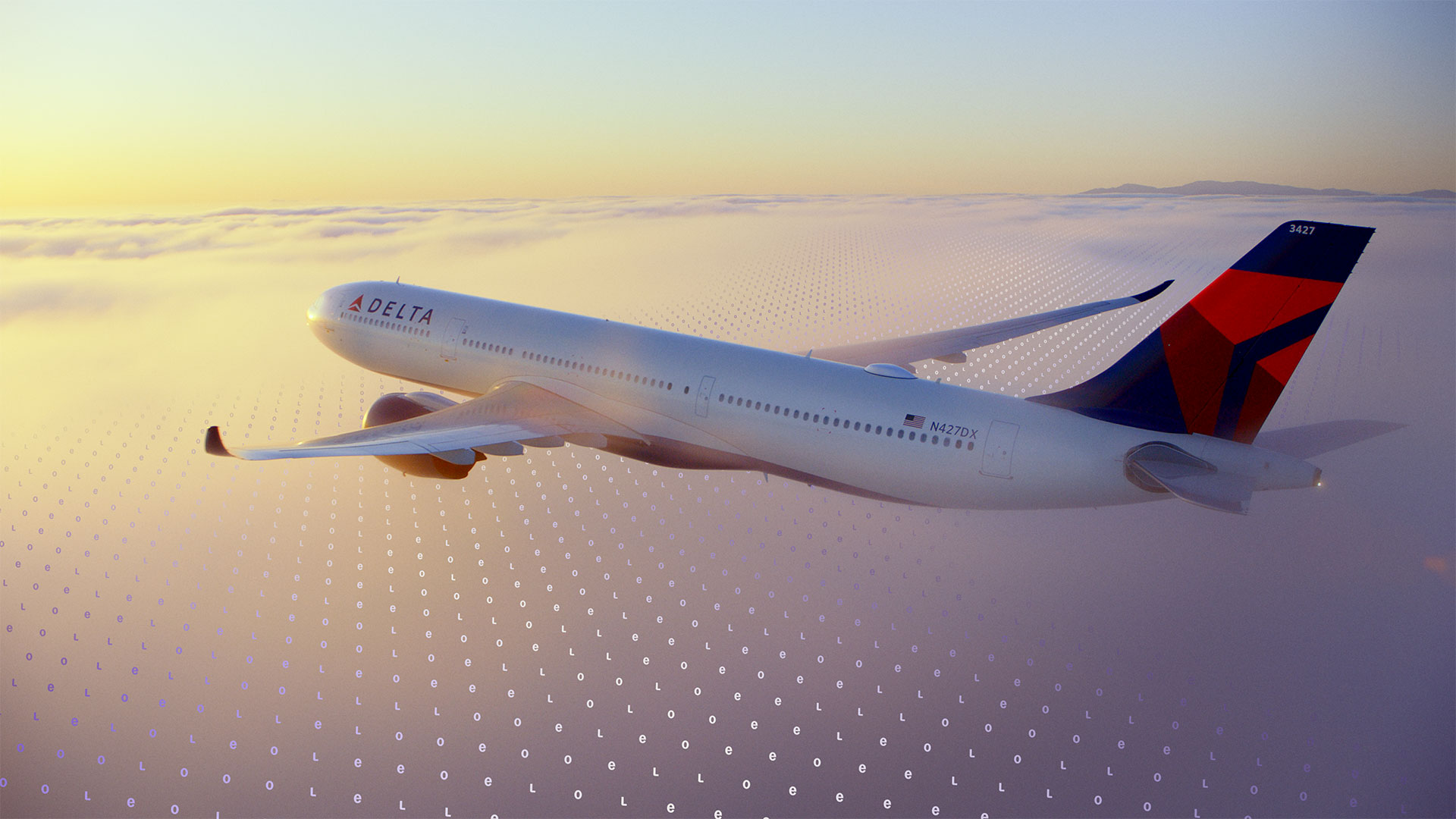
For aviation enthusiasts → The DL jetliner in the article’s photo is an A330-900, and it is 2.4 years old.
One thing you mention, but don’t evaluate in your piece is that Delta wants to control the customer data for monetization.
When I CHOOSE to use a free product in exchange for my data, I’ve given consent, but when I purchase a product, I don’t want MY data monetized on top of the purchase price! It’s not Delta’s data, it’s my data! And, no Tim Delta, Delta is not “protecting customer data” they are using it for monetary gain! I don’t want to click through another portal that adds to value to me and have my interactions tracked.
In Europe more people are paying attention to data privacy issues than in the US, but I think it will become more of a topic here, too, as the downsides become more apparent.
you honestly think Musk and Starlink protect your data 0r that happens even in the EU? if you do, you are beyond naive.
If you don’t want anyone to have your customer data, don’t share it WITH ANYONE whether in the EU or on a Starlink equpped aircraft.
and it is entirely possible that DL is telling Starlink that Starlink cannot have the customer data – DL will serve as the frontend and no other entity can ask for DL customer data.
We don’t know the terms of what happened – if anything related to data happened at all – but if DL did take that stand, they ARE protecting your data which you already gave to DL.
Well as usual Elon is lying.
Starlink requires no portal and that it just works like at home? Someone better tell the other airlines that already have it.
United requires you to click through. Air France requires you to be a Flying Blue member.
Here are Qatar’s instructions straight from their website:
Our B777 and A350 aircraft are now equipped with Starlink* when you fly to and from any of these destinations. Once on board, connect to the Oryx Comms Wi-Fi network, join Privilege Club or enter your email address if already a member, and you’ll be ready to go.
Lufthansa’s press release (which means a login will be required): New high-speed internet free of charge for status customers and Travel ID users
Yep, I joined Flying Blue in anticipation of using wifi on a recent AF TATL flight. Turned out I had no need for it. Which is, BTW, the point. Wifi is really that important to most of us on flights. But, yes, it is important to a few (like Matthew). Remember how cool it was that you had a telephone available at every seat? Wifi isn’t exactly that (it will be free an fast on every plane in less than a decade), but it will be a trivial as can be.