
JetBlue CEO Joanna Geraghty raised eyebrows with a memo addressing bankruptcy rumors, but I think the important takeaway is that she
JetBlue CEO Says Bankruptcy Off The Table In 2026, But “Decks Are Stacked” Against Small Carriers Like JetBlue
First, let’s examine Geraghty’s memo in full so we understand the proper context of her comments about bankruptcy:
Let me start with what matters most. Some of you have asked about recent public comments suggesting that JetBlue could file for bankruptcy this year. It’s not something we’re considering. It’s a reminder of how quickly speculation can take hold and be repeated as fact.
With this said, we’re operating in an environment that is more challenging than we had expected at the beginning of the year particularly as it relates to fuel prices. We’re approaching the current situation with discipline and care. We’re actively managing what we can control, including capacity (the amount of flights we operate), pricing, and costs, and we’ll share more detail on next week’s earnings call.
And, as Ursula has previously shared, we do have liquidity (money in the bank) and access to additional sources of capital to get more money in the bank. Last week, we entered into an agreement to borrow $500 million against 22 of our aircraft, with the option for an additional $250 million if we need it. Of course, accessing that capital brings with it additional interest expense so we are being thoughtful as to how we approach things.
There’s also been a lot of discussion about potential consolidation across the industry, as well as questions about Spirit’s future. Any further industry consolidation would still require regulatory review, and outcomes are far from certain.
It’s no secret that we believe that in today’s airline industry the decks are stacked against smaller carriers like us. Scale matters in our business. The big airlines benefit from larger networks, more diversified revenue streams, and greater operational flexibility when disruptions occur. Scale also matters in areas like loyalty and credit card partnerships, where broader networks can drive higher customer spend.
I know how distracting and even scary all the noise is. In periods like this, it’s important that we stay informed but not distracted. Our focus needs to remain on what we can control and how we continue to execute.
You’re seeing that focus come through in markets like Fort Lauderdale, where we’ve recently returned to the #1 position. That reflects the strength of our strategy and, more importantly, the way you show up for customers every day. Across the airline, we’re continuing to strengthen our network, invest in our product, and improve reliability. Our focus is on building a stronger JetBlue over the long term.
This industry moves in cycles. Conditions can feel challenging in one moment and shift in the next. The airlines that navigate these periods best are the ones that stay focused and execute well.
In moments like this, it comes back to a few fundamentals:
- Fly safely
- Deliver reliable, caring service
- Take care of each other
- Stay disciplined on costs
Thank you for everything you do every day to support our customers and each other. It’s what sets JetBlue apart and it’s what I believe will carry us forward.
Many have jumped on the fact that she only ruled out a bankruptcy for “this year, ” suggesting JetBlue will pursue a merger/acquisition this year and if not, may consider a bankruptcy filing next year.
I would agree…I think JetBlue would very much like to be acquired by American or United (or Alaska) and is trying to position itself for such an acquisition. But the debt is a HUGE problem and I expect JetBlue’s 2026 Q1 earnings report next week to further disappoint investors.
With the Iran War throwing a wrench into JetBlue’s recovery plans thanks to oil prices that have doubled, JetBlue is likely digging a deeper hole. As much as United Airlines, in particular, wants to take over JetBlue, at this point I still don’t think Kirby is willing to take such a dangerous wager.
If the U.S. government somehow finds a way to fund Spirit, JetBlue may be next in line…how that would complicate things, I do not know: would that represent essentially a refinance at a lower interest rate or would it mean that a potential suitor would be even less interested because the U.S. would own a piece of the company (and perhaps even a large chunk of it).
The timeline also reflects the current political reality. With a highly unpopular war in Iran and rising inflation, the GOP is likely to lose its majority in the House and perhaps even in the Senate. While Congress might not be able to block a merger at this point, Democratic majorities in one or both Houses would further increase scrutiny over any potential tie-ups and if a Democratic candidate wins the 2028 presidential race, a new Justice Department could sue to undo any merger.
If JetBlue does file for bankruptcy, it will not be Chapter 7 (liquidation), but Chapter 11 (reorganization). The idea that it can simply dump its debt and then be a more attractive carrier to be acquired is a pipe dream. In some way, the debt must be reconciled or else JetBlue will face a shareholder revolt.
CONCLUSION
JetBlue is ruling out a trip to bankruptcy court, at least for 2026. In the meantime, JetBlue will continue to adjust to the economic uncertainties of an environment of fuel prices twice what they were last year. JetBlue will also continue to explore merger options, though the high debt casts a cloud over any marriage.
One way or another, I don’t think JetBlue has an independent future, though I don’t see a move by American (especially after it announced a new commercial agreement with Alaska Airlines earlier today) or United (too much skepticism over JetBlue’s debt and its own growth problem in environment) in the immediate future to acquire it.
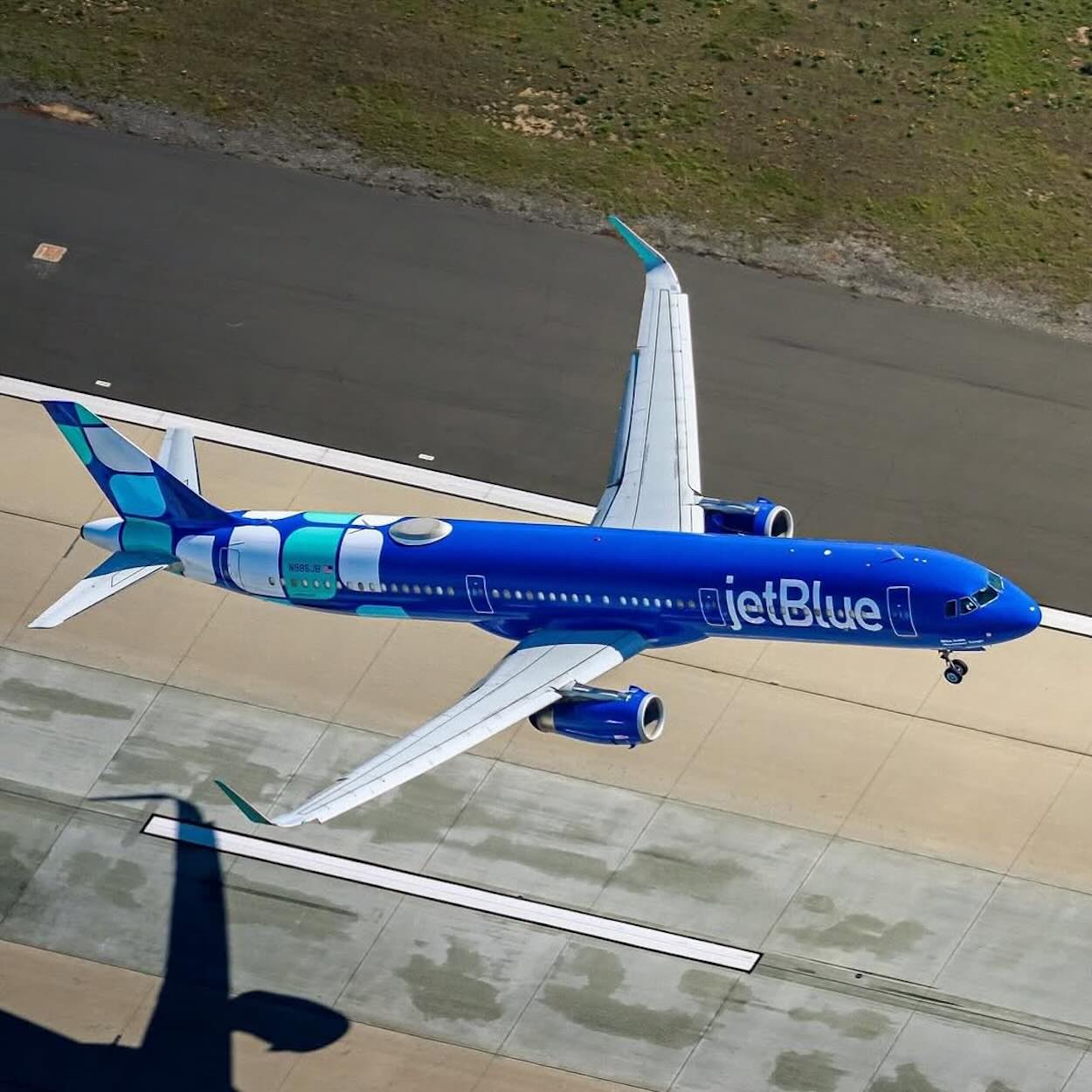
image: JetBlue





Whatever happens… I wish more airlines would adopt jetBlue’s ‘most legroom in economy,’ live TV, free WiFi, and Mint.
The ‘most room in economy ‘ attribute goes away with the reconfig to bring F cabins.
This is why large consolidations should never have happened. They argued that there were too many airlines and reduced the number of airlines. Problem is that the smaller that remained are barely competitive anymore and can’t do much against large behemoths. As such the mergers were indeed uncompetitive without necessarily leading to monopolies/ duopolies.
DOJ and DOT need to be a lot more constraining. Divestitures is like sending bones to a dog.
JetBlue needs a future with Alaska. It would be a good fit on a number of levels. Then again Alaska didn’t exactly cover itself with glory with the latest “enhancement”: killing off advance free upgrades by intensely loyal customers so the airline can try to scrape out small revenue by selling those seats to non loyal customers. Given Alaska’s position as somewhat of a niche player it seems intensely shortsighted to burn their best customers to gain a short term buck. Can’t an airline or hotel chain enhance a loyalty program without quotation marks around the enhancements?
She is not wrong and neither are you, Matthew.
but let’s not forget that B6 was the scrappy airline that was going to upset the apple cart in NY aviation and it succeeded for a while.
But DL, who knocked AA off at JFK and LGA, was no more interested in letting B6 get away w/ much.
and B6 has run a poor operation for years which is its own fault; AA and DL both run better operations from NYC and BOS than B6.
B6 will start screaming about survival just as midterm campaign season heats up after the summer.
those that are convinced that consolidation has been bad ignore other industries and also the fact that the growth that has taken place by the legacies over the past 15 years has been organic which the government cannot stop unless it nationalizes the airlines.
Best of good luck to B6, but for now, the company’s outlook still remains uncertain.
Incidentally, the B6 A320-200 jetliner in the article’s photo is 22.3 years old but looks in great shape.
Nobody wants to buy JetBlue’s nearly $10 billion debt.